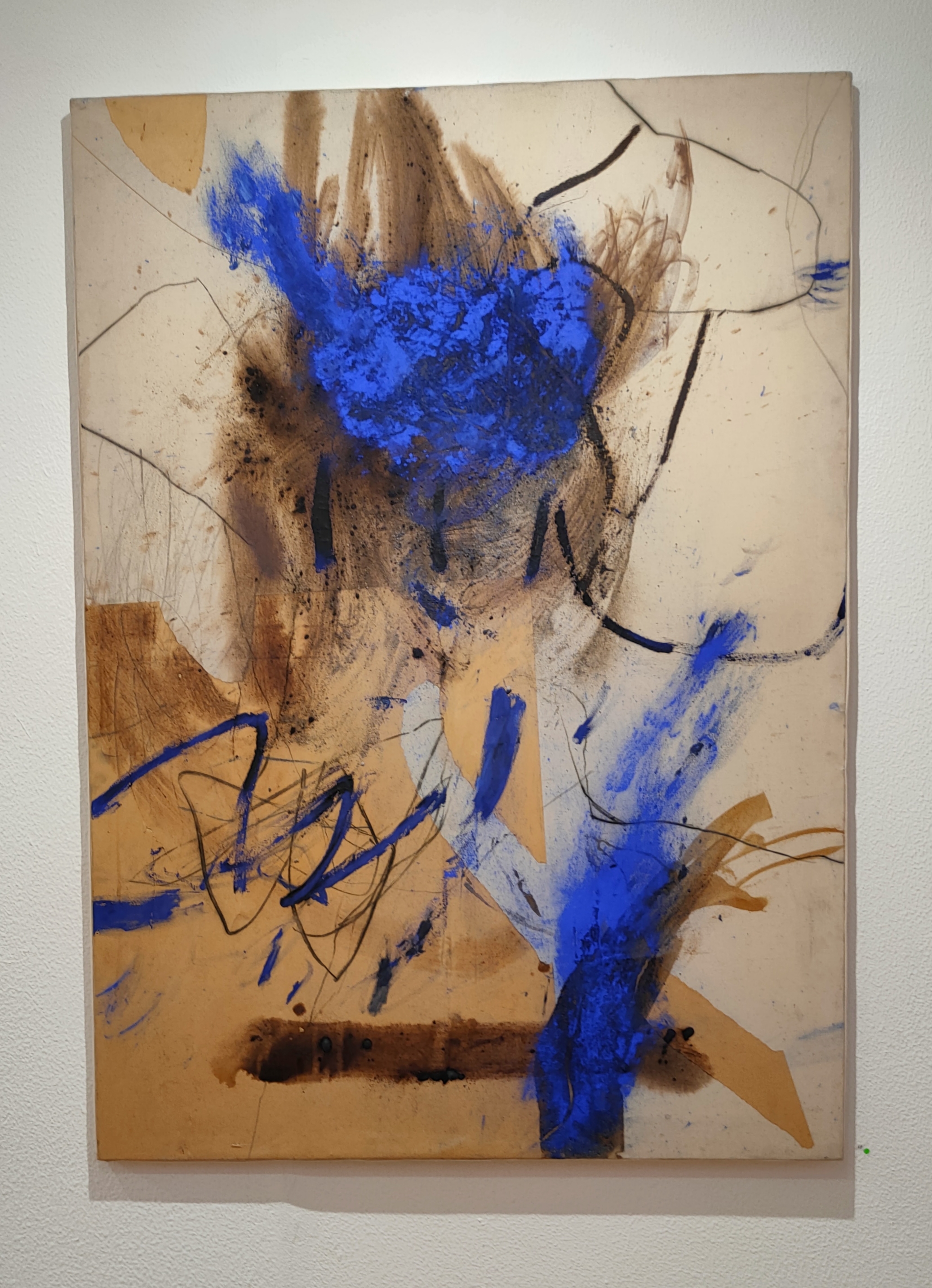
GALLERY 7 presents the solo exhibition of artist Matina Stavropoulou entitled ‘ANASYNTHESIS 1994-2023’ – an exhibition realised from start to finish with the artistic organization/curation and theoretical involvement of artist Nikos Kanoglou. Stavropoulou’s large-scale works in the exhibition present her semiological exploration of color identity, and her forging of her own form of a purely abstract expressionism, moving away from the play between figuration and abstraction which has been evident in the work she has exhibited before. In fact there is only one work which displays this blend of figuration and abstraction more evidently in the current exhibition, which runs till November 25.
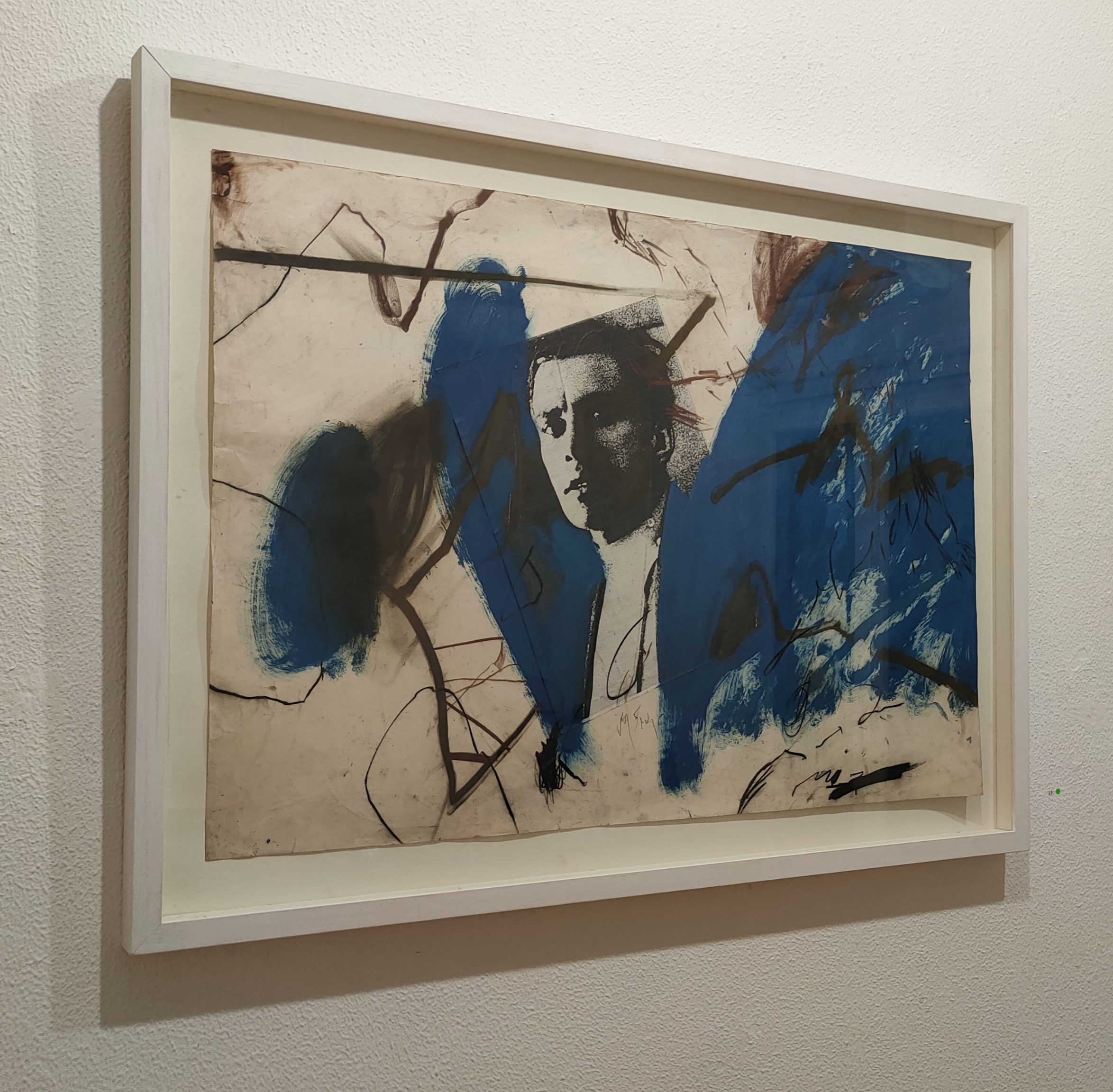
Stavropoulou’s current solo exhibition at Gallery7, presents a side of this artist’s oeuvre where the abstract realm is meticulously, expressively and thoughtfully studied. Her works have been inspired by ancient civilisations and historic art movements: from Egypt’s use of blue, to renaissance figures. Yet these have been the departure points, which have enabled her to create a whole new different, thought-provoking visual world.
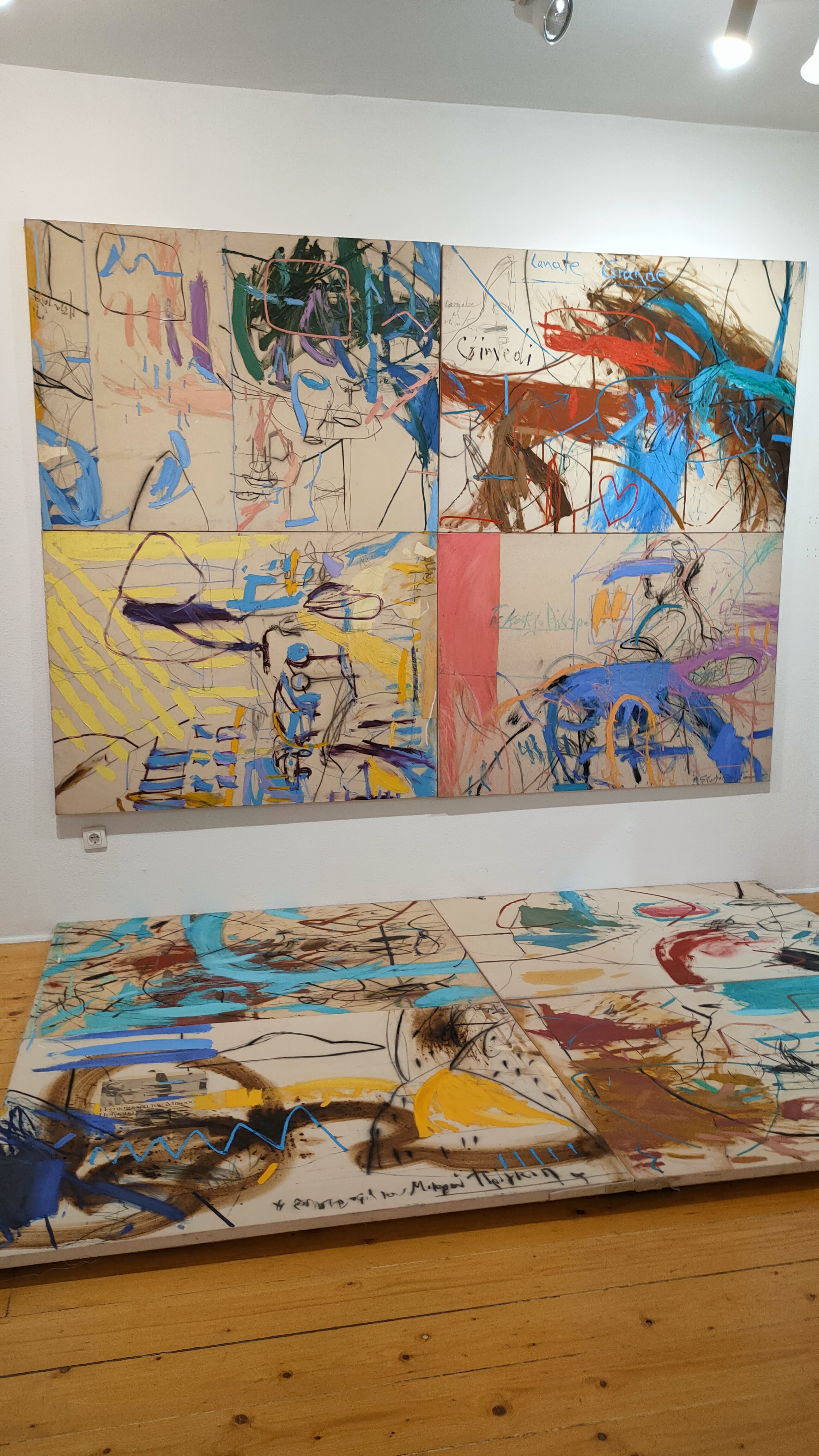
Interestingly enough, despite her leap into pure, contemporary abstract expressionism, with its reverence for the primordial, Stavropoulou has also stayed true to certain traditional academic practices, such as her thorough planning of the work via sketches and preliminary work. Also, in terms of painting practices, her application of rabbit-skin glue to the raw canvas as a primer, is something that renaissance artists were particularly familiar with. This creates an interesting primary layer for the works, with a slightly ochre yellow tinge. White paint on this surface is read as a colour, and can be used effectively. Of the other colours that this artist uses, Nikos Kanoglou points out the following in his text for the catalogue: “She aims at going beyond the tangible effect of colors. She aims to go outside the box, beyond the mold but without breaking it… to leave her personal mark on the history of painting, which in her works includes Minoan Crete, the Cape of Santorini and the Renaissance, via her use of cyan blue, lapis lazuli and rouge anglaise”.
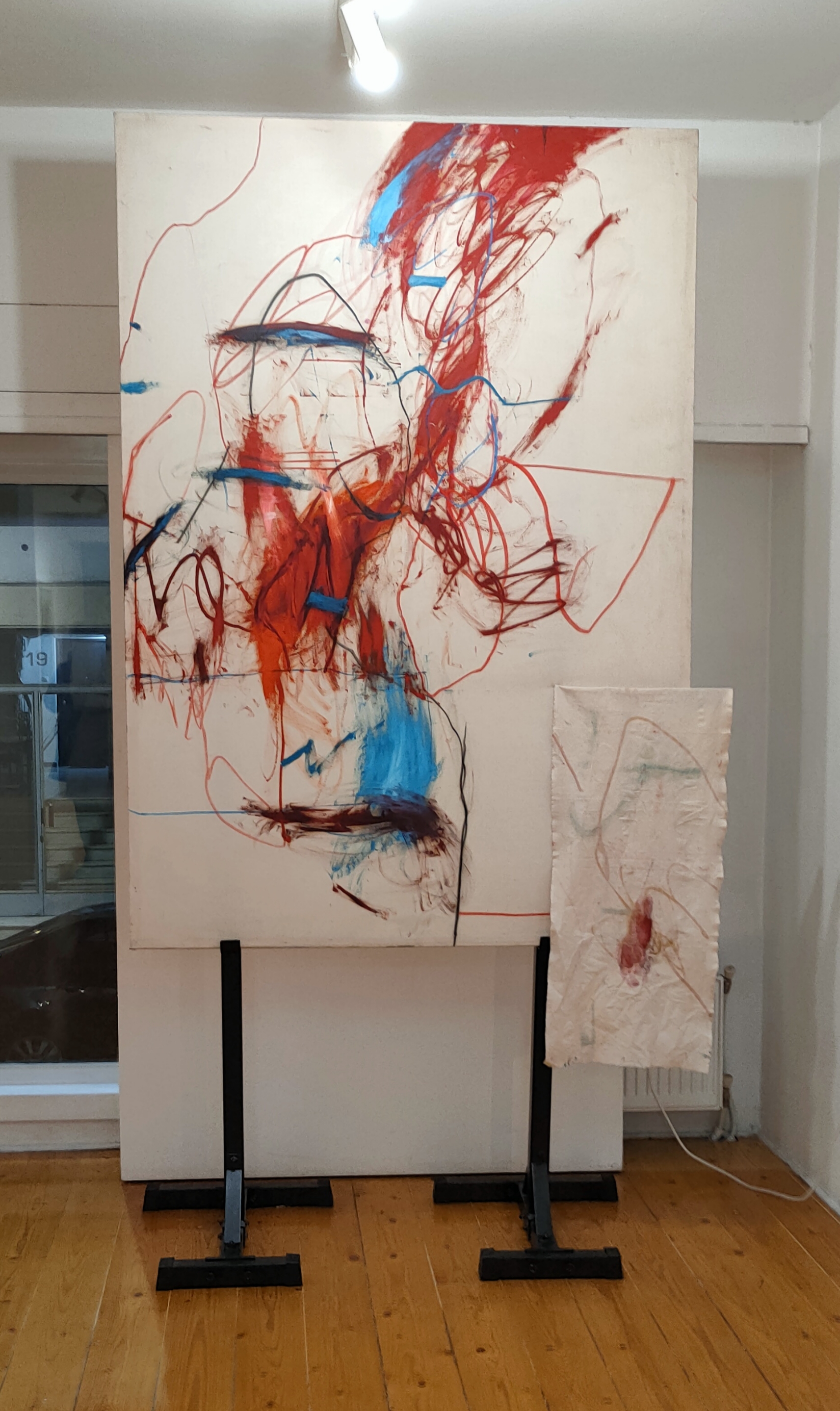
Matina Stavropoulou’s semiological exploration of colour identity through this series of mostly large-scale works, sees her returning to her largest scale which she had explored in her abstract explorations of the 1990s. In this current exhibition, she was invited by artist Nikos Kanoglou to highlight works from her career of the last 29 years, creating a new semiotically complex installation. The art historian, Margarita Kataga, notes in the catalogue: “The partnership with the visual artist Nikos Kanoglou, which began in 2022, started as an artistic partnership between the two, and was the trigger for redefining scale. Whilst studying the morphological details in Stavropoulou’s work, Kanoglou discerned the hyper-scale dynamics within it as well as the balance between horizontal and vertical compositions. The return to visual stimuli and grandiose abstraction, plus the mental connections made via the individual elements that arise within it, led Stavropoulou to the decision to return to monumental compositions, as a new field of action.”
Some abstract thoughts
Reactions to Stavropoulou’s abstract works have been various, and these reactions make one want to ask the following question in Athens: Who’s afraid of abstract art? Because the truth is that abstract art has had a hard time in Greece in general. After a discussion with Stavropoulou and with artist Nikos Kanoglou at Gallery7 (who was actively involved in all stages and aspects of the artistic organization/realization of this exhibition), we came to the conclusion that pure abstract expressionism, was not a movement that was embraced in Greece, as it was in other European countries in the 1940s-50s (by artists such as Jackson Pollock, Mark Rothko, Willem de Kooning etc). Apart from a few artists who explored geometric abstraction in Greece, other forms of abstraction have not been delved into to the extent that other genres have, which stayed true to figuration, representation, naturalism and academic drawing. Certainly the situation of Greece during the 40s and 50s was not fertile ground for abstract expressionism form many reasons. Meanwhile, outside of Greece, a look at contemporary international art trends today will reveal abstract expressionism’s continued development and its many offshoots.
We shouldn’t forget that at the core of visual art, is abstraction. In order to render a ‘realistic’ portrait, or scene, abstract elements are used (line, colour, form, composition etc). When these elements take on a primary role, or when an artist goes further into the abstract realm from a figurative departure point, we are dealing with the most important components of the visual art process and experience. And that’s the beauty of abstract art. When the line is freed from the prism of ‘representation’ it can say so much more, as is the case with colour and form. Furthermore, in abstract art, one could argue that there is a stronger role played by the viewer, who is allowed to read into an abstract work meanings that only they can bring to it, seeing as this kind of work is open to interpretations in a way that a figurative work which has stayed true to copying meticulously the image of the world as we humans see it, cannot be.
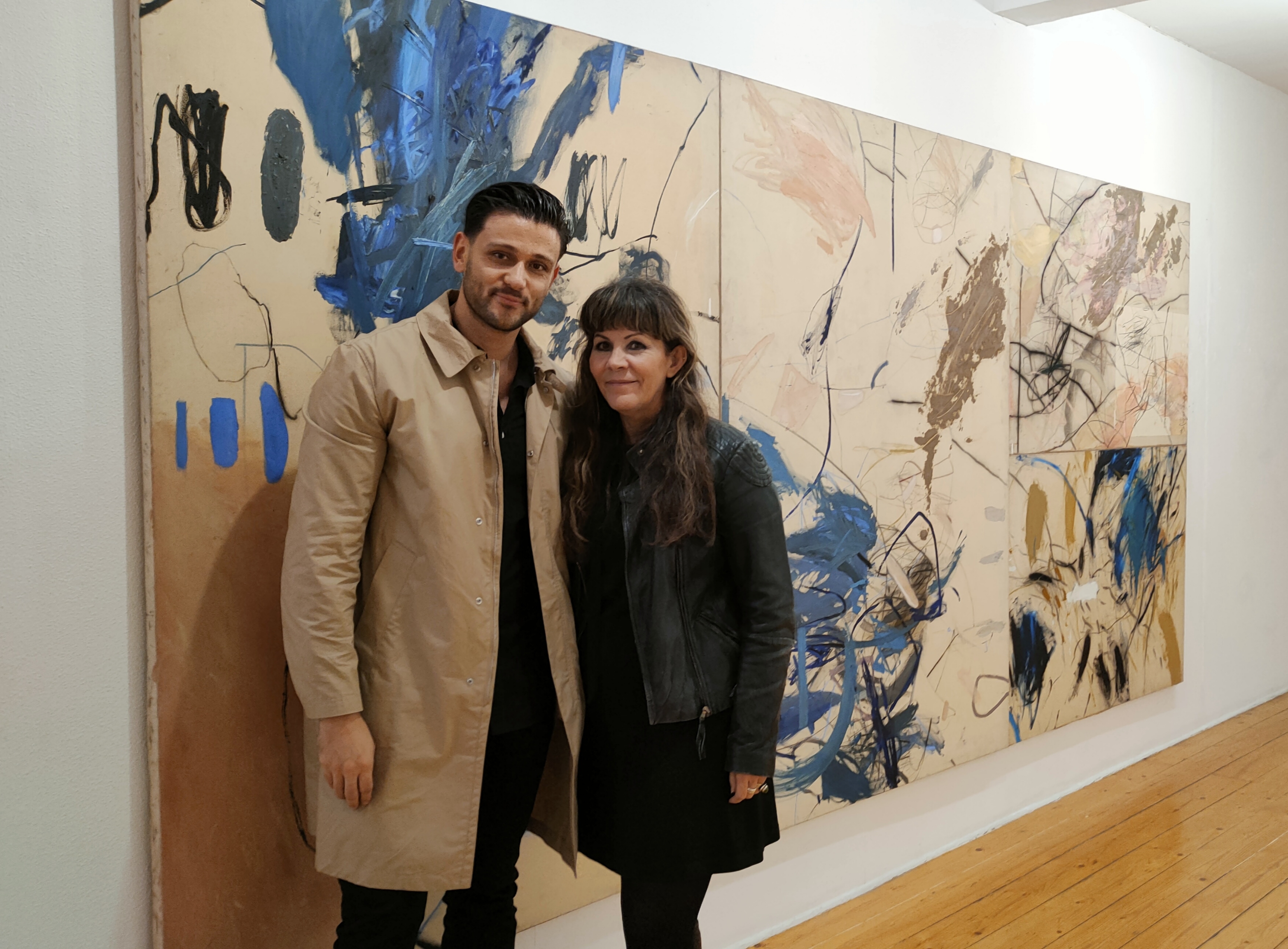
Let me also point out the importance of abstraction in literature: it is often the abstract nature of ancient Greek texts of literature, philosophy and art which has kept them alive through the ages, and has allowed them to be constantly re-interpreted. In the case of Modernism, Virginia Wolfe’s development of stream of consciousness writing is an example, that changed the course of literature. In terms of modernist art, and the beginnings of modernist abstraction, it was often the case that artists were inspired by ancient civilisations and their abstractions (eg. such as African masks and and Cycladic art that inspired Picasso), in order to create their own new forms of abstraction, and new realities. Because, as Giacometti pointed out: “The object of art is not to reproduce reality, but to create a reality of the same intensity.”
- The exhibition of Matina Stavropoulou’s works, ‘Anasynthesis 1994-2023’ runs till November 25. Gallery7 is on the corner of 20 Solonos St &Bucharestiou St, Kolonaki, Athens. Open Tues, Thurs, Fri 12-8pm and Wed, Sat 12-4pm. Closed Mon, Sun. TEL.: (+30) 210 361 20 50 / athens.gallery7@gmail.com
‘Art Scene Athens’ is written/run by artist/journalist Stella Sevastopoulos. Dedicated to presenting what is happening on the Greek art scene (but not only), and also to giving Greek artists an international voice on the internet. For more on Stella Sevastopoulos’s art, click here If you would like to be featured in Art Scene Athens, please send email (stelsevas@yahoo.com).
 art scene athens