Stella Sevastopoulos catches up with Eleni Arvaniti, to talk about her new art exhibition at Okupa. With the title ‘Insatiable’, this is an exhibition which dares to embrace a sensitive and primordial subjet: the animal nature of human nature.
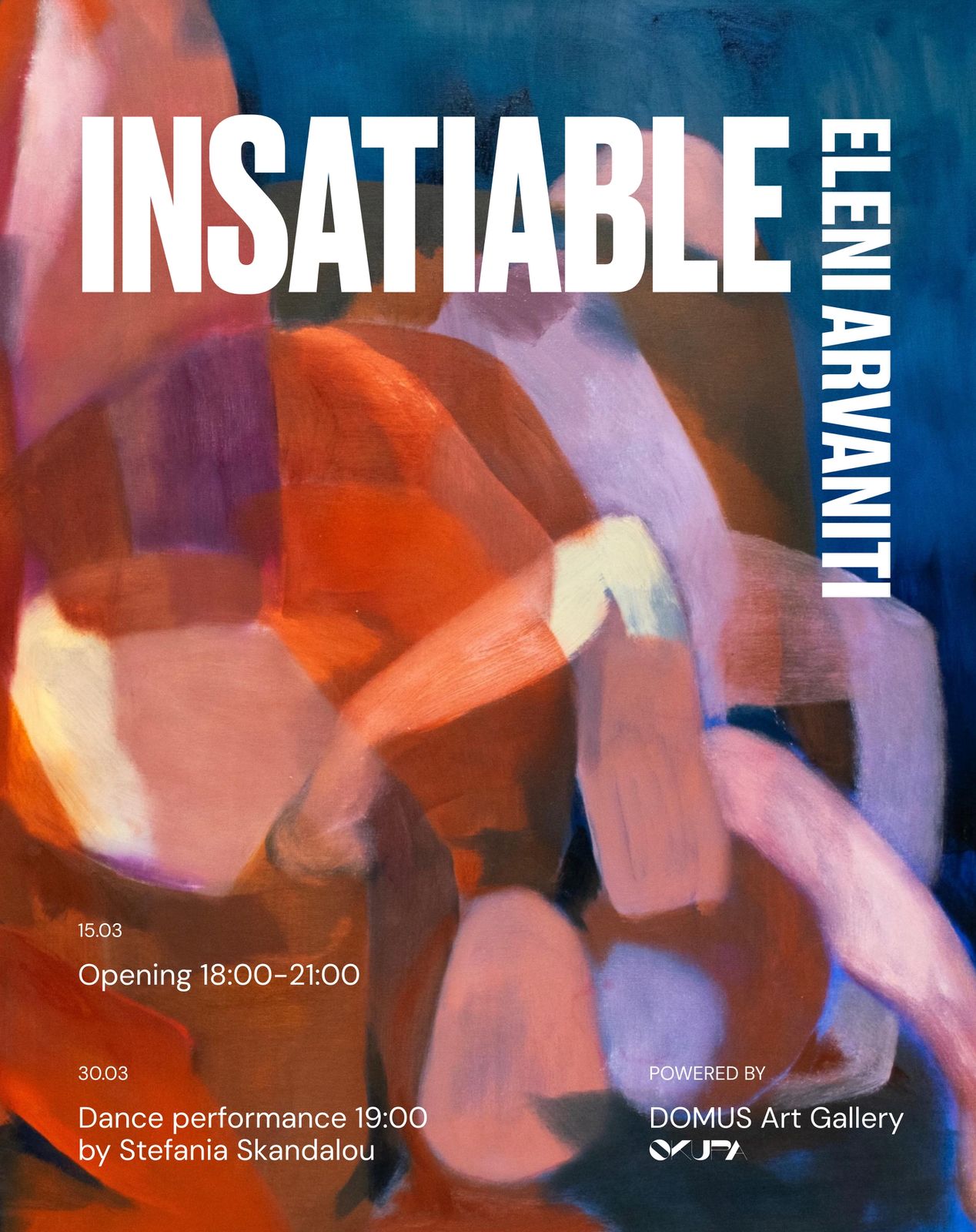
THE ART SCENE OF ATHENS is forever growing and transforming, like a living organism. A new addition to this city’s vibrant scene is the space Okupa in the Kerameikos district of Athens, where artist Eleni Arvaniti’s solo exhibition, with the title ‘Insatiable’, opens to the public on Sunday, March 15, 6-9pm (and runs till April 15). The event, powered by Domus Art Gallery, will also comprise a performance, on March 30, 7pm, by contemporary dancer and capoeira expert Stefania Skandalou.
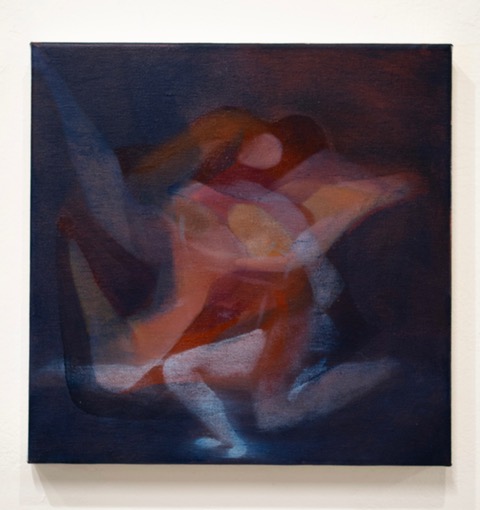
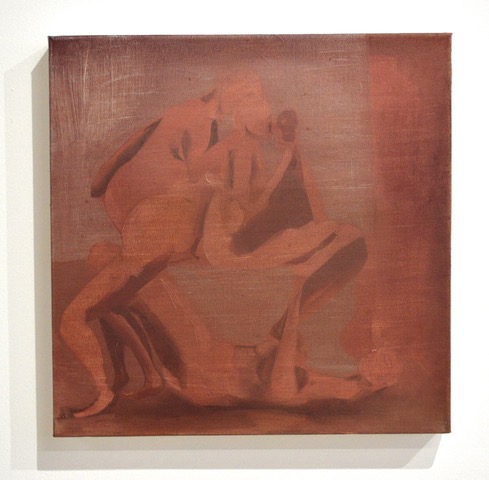
Arvaniti’s work touches on a subject-matter which is both sensitive and primordial. The figures in her paintings are entwined, like the pieces of a puzzle, or a messy ball of threads. The human figure is explored, erased, re-instated in a dance of limbs, depicted via fleshy tones and a sculptural perspective. Are these figures making love or waging battle? Arvaniti’s works compel us to confront the fragile threshold between chaos and harmony within our primal nature. She offers no definitive answers; instead, she invites a state of profound contemplation on what the nature, of human nature is.
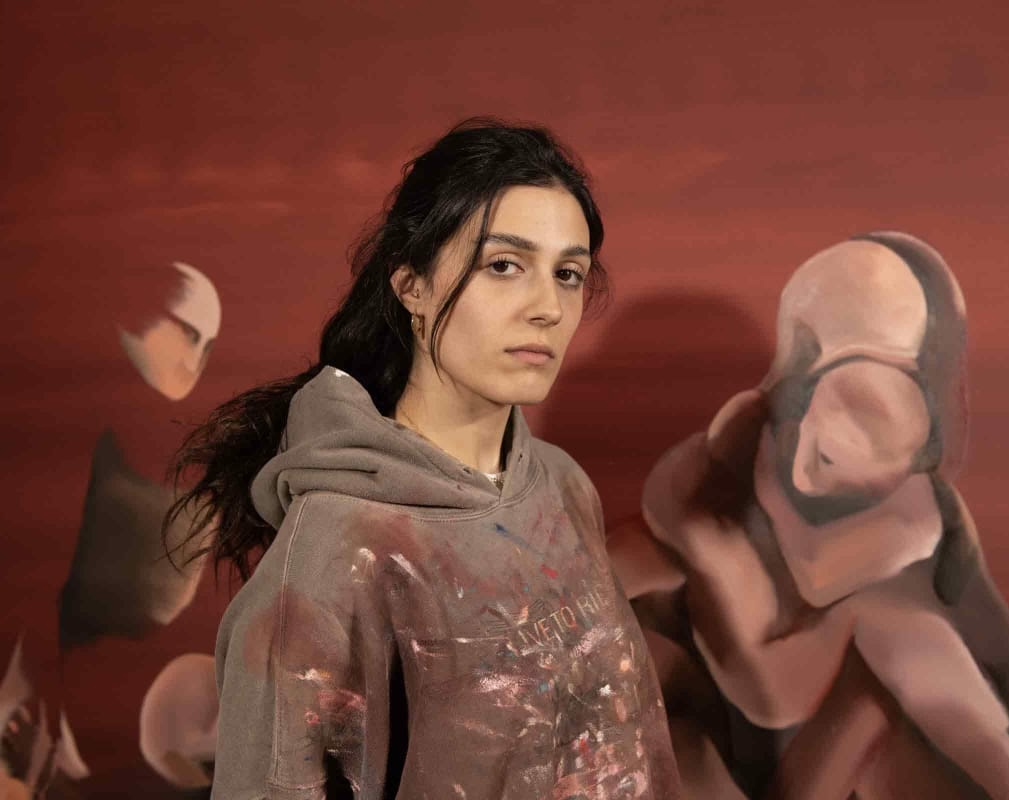
‘Insatiable’ unfolds through the artist’s exploration of blurred boundaries between desire and conflict, intimacy and confrontation. Her compositions examine how these forces merge and interact, evoking simultaneously the chaotic intimacy of collective ecstasy and the visceral intensity of combat. The exhibition reflects Arvaniti’s ongoing inquiry into divine, insatiable desire, a longing that continuously expands, always seeking more.
Collective over singular: Arvaniti’s human figures move rhythmically within a choreography of lust and tension. The viewer witnesses bodies accumulating meaning as they merge into a restless mass, an unstoppable emotional momentum. Identity dissolves into shared physicality, and individuality gives way to unity.
The dominant tonal palette lends the works a quiet, melancholic warmth. The atmosphere remains introspective and intimate, while colour becomes a vehicle for psychological and physiological complexity.

The works of this exhibition will be accompanied by a performance, on March 29, by Stefania Skandalou, a dancer of Capoeira and contemporary dance. She will embody and translate the notion of the insatiable through movement, responding to Eleni’s works and expressing through her own physical language, the tension, desire, and restless vitality that pulse within the paintings.
About Okupa
Okupa is a new cornerstone of Athens’ growing creative community. An unconventional urban hub in the heart of the city, Okupa opens its doors both to local and international artists, contributing to a new and dynamic chapter in Athens’ cultural landscape where contemporary experimentation resonates alongside ancient echoes.
What follows is an interview with the artist, Eleni Arvaniti, which explains her work further:
- Tell us about your artistic journey so far.
I graduated with a BA (Hons) in Fine Art from Bath Spa University in the UK in 2022. Prior to that, I completed a BTEC Foundation in Art & Design at Doukas School in Athens (2018–2019) and was admitted to the Department of Art History at the Athens School of Fine Arts in 2019.
During my studies I was awarded the Peter Kinley Prize in Bath in 2022, which was an important moment of encouragement early in my practice. Since graduating, I have been living and working in Athens, where I continue to develop my painting practice.
- Tell us about what the human figure means to you in your work.
My paintings exist somewhere between figuration and abstraction, with the human body often at the centre of the composition. Through these forms I explore the instincts humans share with animals, particularly those of reproduction, defence, and survival.
In earlier works, the figures were more animalistic, often appearing with multiple limbs or heads, almost hybrid in nature. Over the past year, the forms have gradually become more recognisably human, as I realised that the human body itself was what truly interested me as a subject.
- Your human forms have no race or gender. Instead, you focus on human behaviours.
I often observe the way people move, gather, and interact. Living in a human-centred world, I find it important to explore the behaviours and needs that connect us. By depicting bodies without defined gender, race, or identity, I try to reach something more universal, an underlying human condition that transcends individuality.
- In your compositions, groups of naked humans are entangled. The erotic nature of these works is counterpoised by an interest in the formal relationships and dynamics of the figures. Tell us how and why you gravitated towards this subject in your painting.
My work often depicts groups of entangled bodies, kissing, embracing, or fighting. The focus is rarely on a single figure; rather, it is on the relationships and tensions created between bodies. I am less interested in individuals as separate identities and more in the dynamic structures that emerge when bodies interact.
- So, it seems that you want to get to the core of human nature through your art practice, and explore the animal instincts of humans. Maybe this is because of the state of the world we live in, which seems to be becoming more of a jungle day by day. Or is it something else?
In my practice I return frequently to primal human instincts, especially the moments when human behaviour seems to approach the instinctive nature of animals. Animals move and operate in packs, and in a similar way I often depict humans as collective bodies rather than isolated individuals.
This perspective has also been influenced by being vegetarian for the past ten years, which led me to reflect more deeply on the relationship between humans and animals, as well as the power structures within that relationship. I am particularly interested in moments of surrender, the ways animals surrender, but also the ways humans surrender to one another, emotionally and physically.
- What are the influences on your art?
My process often begins with imagination, memory, and intuition. I usually start by sketching and experimenting with shapes and forms, allowing the composition to remain somewhat open so that viewers can interpret the work in their own way. Many paintings also originate from phrases or fragments of text, from songs, books, or films. Sometimes I feel as though I am trying to translate a sentence into an image, moving from language into drawing and eventually into painting.
My colour palette is influenced by both painting and photography. I am drawn to combinations that feel simultaneously erotic and dark, and I enjoy exploring the tension this creates within a composition.
– Which artists do you admire?
Among the artists whose work I admire are Ambera Wellmann and Cecily Brown, particularly for the way they balance figuration and abstraction while maintaining a strong sense of physicality in their painting.
- For more on Eleni Arvaniti, check out her instagram account here
- For more info on the upcoming exhibition at Okupa, contact Chryssanthi Papaharissis (ckpapa@outlook.com), or Domus Art Gallery: (domusartgalleryathens@gmail.com)
- ‘Insatiable’, with works by Eleni Arvaniti, opens at Okupa on Sunday, March 15, 6-9pm. Runs till April 15. Okupa is on 9 Psaromiligkou Street, Athens, 10553.
Art Scene Athens’ is written/run by artist/journalist Stella Sevastopoulos. Dedicated to presenting what is happening in the Greek art scene (but not only), and also to giving Greek artists (and artists based in Greece) an international voice on the internet. For more on Stella Sevastopoulos’s art, click here If you would like to be featured in Art Scene Athens, please send email (stelsevas@yahoo.com).
 art scene athens