Stella Sevastopoulos talks to Achilleas Tsantilis, Director of Tsantilis Art, the oldest and most prestigious gallery in Athens, established in 1925. As Senior Art Expert of the Greek Court of Justice and President of the Hellenic – Cyprus Association of Art Authenticators & Appraisers, Tsantilis warns of the many forged works of Greek art on the market.
ART is many things. For example, it can be an investment, a statement, a concept, an aesthetic marvel, a historical documentation, a technical wonder, or an impression of everyday life. You will encounter all these forms of art at Tsantilis Art, which has a history that dates back to 1925, and with three generations of art expertise. Achilleas Tsantilis, director of the gallery in Kolonaki, but also Senior Art Expert of the Greek Court of Justice and President of the Hellenic – Cyprus Association of Art Authenticators & Appraisers, believes that above all, art is an experience. And it is the experience of art which inspires both artists to create, and art collectors and art lovers in general, to explore and visit art exhibitions, galleries and museums. But be sure that your art experience is an authentic one…
The interview with Tsantilis took place among beautiful antiques – from coloured crystal decanters to miniature icons with jewel-like hues. Tsantilis, seated behind the intricate designs of an antique, Dutch, ebony table, with ivory and floral inlays, and swirly torchon legs, spoke of the dangers of forged works in Greece. But he also emphasized the many virtues of Greek art and artists. Read on to find out more…
What sells most on the Greek art market?
Collectors in Greece in general prefer to choose works by Fassianos, Mytaras, Hadjikyriakos-Ghikas (or Ghika), Moralis, Kontopoulos, Spyropoulos, Vassiliou. This is because they are considered a good investment. That’s the hard reality. And this means that the works of contemporary Greek artists are a second choice. This doesn’t mean however that there aren’t contemporary Greek artists whose works can fetch a good price both here and abroad.
The work of contemporary Greek artists however is more affordable, and can grow in value with time. So, could it prove to be a good investment in the long run?
If you choose to invest in the work of a contemporary artist, who is thought highly of or supported by art advisors, art historians, gallerists or art schools, the investment can prove to be greater in the long run, provided that the artist goes well in his/her art career.
You won’t lose your money though either, seeing as you have bought an authentic, one of a kind work, at a good price, in comparison to the prices that the works of more established artists’ works go for.
Yes of course.

Art Authenticators & Appraisers
What is the main aim of the Hellenic – Cyprus Association of Art Authenticators & Appraisers?
As President of the Hellenic – Cyprus Association of Art Authenticators & Appraisers, I speak for its members, but also for all those interested in Greek art and who support it. And what really interests us is that there is a good quality of Greek art on the market. And that the works we see are authentic, genuine works. The works of the Greek artists on the market from the 20th century in particular, are seen as the cultural ambassadors of our country. But also, the works by foreign artists who came to Greece and admired this country and who chose to immortalize its beauty via their paintings. It is important therefore that all measures are taken to prove their authenticity. They are the works that can be seen on show at various cultural foundations, museums and professional galleries in Athens and Greece.
There were indeed many foreign artists and philhellene artists of the 19th century who added much to the genre of Greek history painting in particular, or helped bring awareness about the Greek Revolution even. One that comes to mind immediately is Eugene Delacroix’s painting ‘Massacre at Chios’.
Another interesting example is the Russian painter Ivan Aivazovsky, who painted ‘The Burning of the Turkish Flagship by Kanaris’, which is part of the National Gallery of Greece’s collection. Furthermore, he gifted the work to the Greek State. He was a very important artist who loved Greece and whose works are worth thousands or even up to millions on the international art market. And so, this painter honoured Greece by gifting one of his works to the country.
What would you say is one of the main problems that the Greek art market faces? Apart from the fact that due to lack of support from the Greek government, or from other means, many Greek artists are forced to sell their work in unprofessional ways? (Something which was discussed in an interview with the prominent art dealer and restorer Stavros Mihalarias ).
The problem that bothers me most is that there are many works of 20th century Greek artists in circulation, which are forgeries. They are copies with the aim of deceiving the public. They have been created both by Greek artists but also by other artists from other countries: Albania, Republic of North Macedonia, Ukraine, Bulgaria. These forgeries are created by artists who are talented in their own right, above average. But they create a great problem, firstly because the works they create are fake, but also because these works lower the aesthetic value of Greek works. For example, when a gallery visitor will see a fake work of Spyros Vassiliou let’s say, which is low in terms of aesthetic value, this makes the viewer wonder, why the artist is rated so highly. Why does he have this great name when his work isn’t that good?
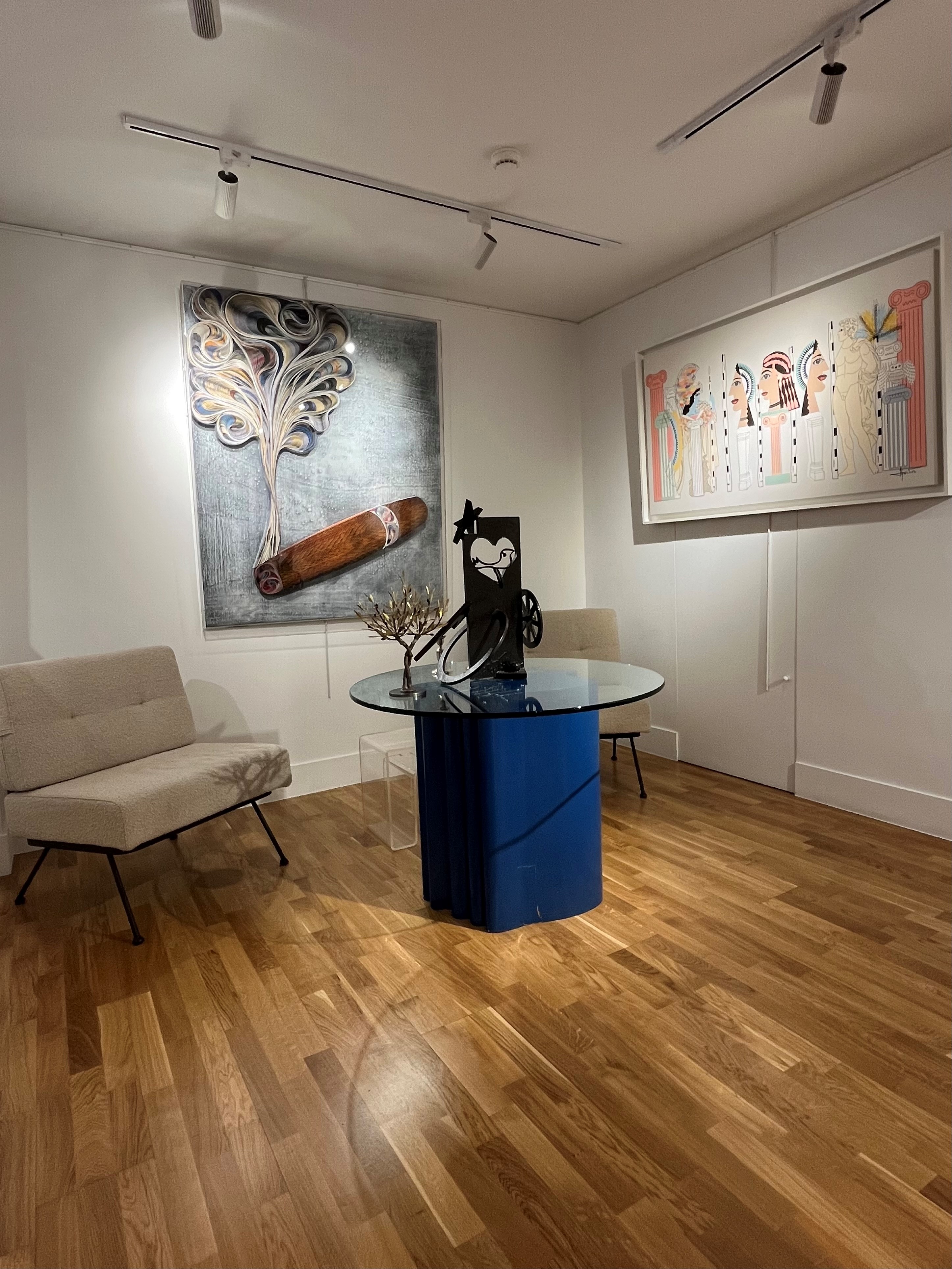
Which artists’ works have been copied the most?
Vassileiou and Mytaras for example have been copied a lot. Fassianos also. Even from the 19th century, artists such as Pericles Pantazis, George Bouzianis, especially his watercolours, but also his oils, because they were abstract compositions and easier to copy in a sense. And these forgers chose on purpose to copy works by Greek artists because the art buying public in Greece often doesn’t have the knowledge that will help it to judge a work as to whether it is good or not. Of course, the case of forgeries is an international phenomenon, but as President of the Hellenic – Cyprus Association of Art Authenticators & Appraisers, I can say that the amount of forgeries in America and Europe bares no comparison to those in Greece, if one compares the size of the population of Greece to the amount of forgeries found here. Let’s consider however that countries like Sweden, England, Spain and France have a centuries-long history of art buying/art dealing. For example, Stockholm’s auction house was founded in 1674. Here in Greece, the history of art buying/selling is a lot less. But these forged works create a bad reputation on the market, about the value of Greek art and its aesthetic value. These forgeries make many artists look like they are below average.
It’s a shame for the reputation of these artists who worked so hard to create an international name for themselves
Yes, it is. Yiannis Spyropoulos was an artist who made a career for himself in America and Europe. Fassianos made a name for himself in so many countries – from Japan to Sweden. His works are included in auctions together with works by Raoul Dufy and Georgio de Chirico. He really is a great artist, whether you like him or not. He is an artist who is rated in art markets worldwide. Ghika, was rated in America especially. Gaitis, was rated higher outside Greece than in Greece! But the forgeries spoil the reputation of these artists.
That’s why if you’re not an art connoisseur, it’s good to get an expert’s opinion before you buy.
Yes of course, and that’s what we are here for. The members of the association are forensic experts, art historians with over 15-20 years of experience. There are other members who have been involved in art historical research, or who have helped in the creation of critical catalogues (catalogue raisonné) of artists, listing their entire oeuvre, who can also help.
Tsantilis gallery has such a long history, which dates back to 1925. Certainly not an easy year to create a gallery in Greece! Tell us about its history.
It was started by my grandfather, who worked in the best framer’s workshop in Greece, owned by Glitsos. He created artistic frames of European standards. Beautifully carved, detailed and gilded traditional frames of old. One of Greece’s most important seascape artists, Konstantinos Volanakis, also worked there, after returning from Germany, because the sales of his works weren’t enough to make ends meet.
To cut a long story short, Glytsos retired and my grandfather took over, but WW2 complicated the situation and the poverty of the Greek population. My grandfather visited Italy to learn new techniques – the use of metal moulds instead of plaster – in order to create more elaborate frames. He became the biggest manufacturer of art frames in the Balkans, with 120 employees. Many artists who wanted frames, couldn’t pay for them, and so paid with works. A section in the framer’s shop with these works, became the first gallery, in Plaka.
In 1948, after WW2, only 50 employees survived, out of the 120 in the framer’s workshop. So, my father continued the business by branching out into antique dealing. He opened a shop on Mitropoleos Street, which lasted until 2000. When my father retired, I took over the business, and now, my son wants to study History of Art, so there will be a fourth generation in our family who will continue our commitment to art.
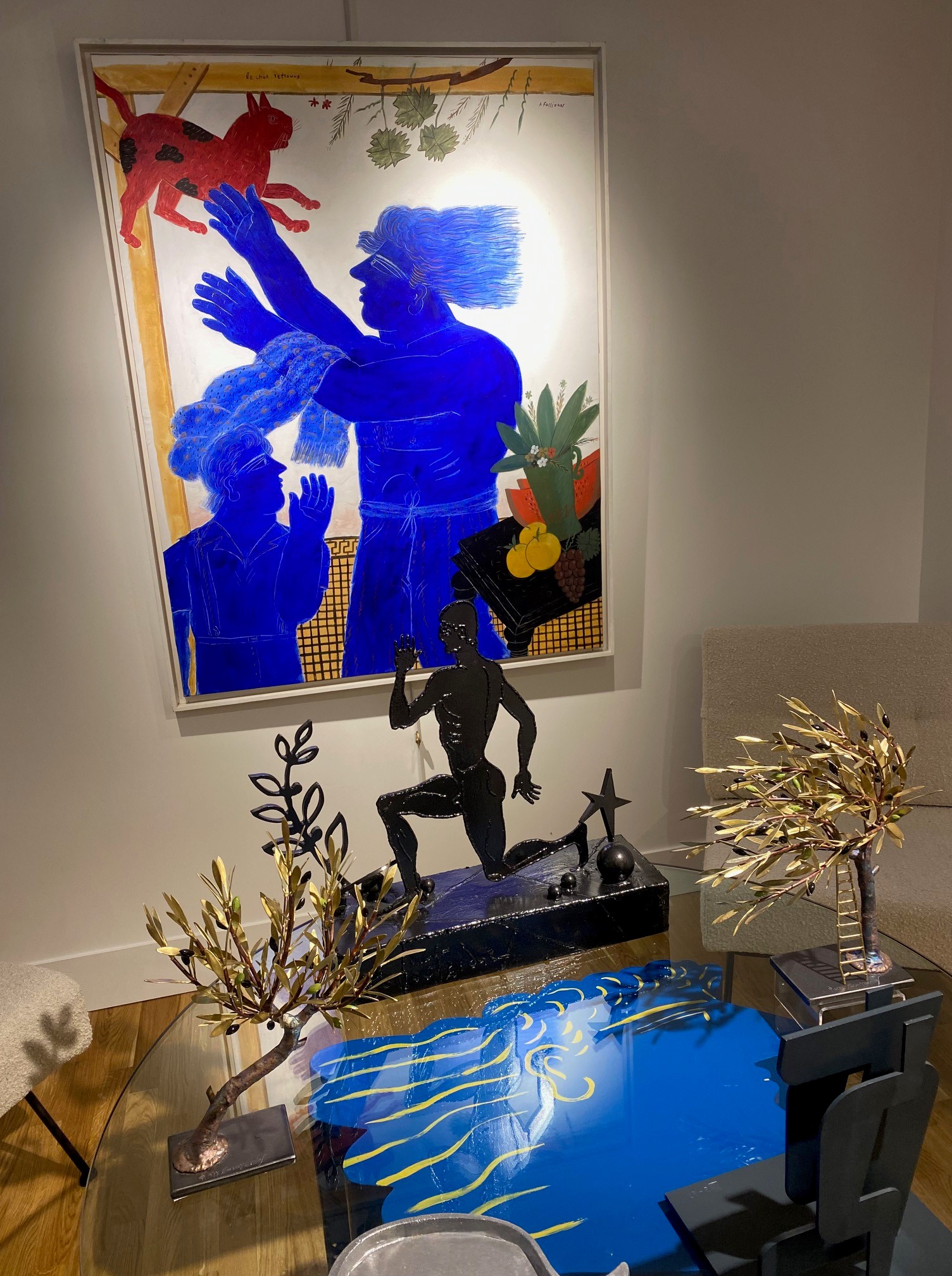
The works of Fassianos, who passed away in 2022, are of particular focus.
The History of Greek Art is especially interesting, because there is what has been described as a 400-year ‘gap’ in the history, during the Turkish Occupation, although it was ancient Greek art that inspired many movements in Western Art, from the Renaissance onwards, towards their development. Greek art lagged behind during the Occupation, only to catch up later. And there is still a lot of research to be done in the history of Greek art, and artists to be discovered.
I agree with you, and I’m glad you brought it up, because it’s also part of my own field of research. Because there are things to be discovered. The period of Greece during the Turkish Occupation or during the Frankish Occupation or even in between those periods, was not without artistic creativity. In the National Historical Museum here in Athens, there are works that have been created during Frankish Rule, which are not religious works (because the argument has been that mainly religious works were created then) and one should see them. We had many talented artists even then.
I am also interested in something that you have also spoken about, the fact that many of the older Greek collectors are ‘patriots’ and they bought Greek art in order to support Greece and the Greek art market.
It was their love of Greece and its history that led them to buy Greek art. But even now, there are collectors who still want to collect works either by Greek artists or foreign artists who had documented historical scenes from the Greek Revolution or whose depictions of Greece are of historical interest. Also, the artists who adhered to the techniques of the Munich School, such as Gyzis, or Lembessis, are of great importance, because they created images of Greece in their works while living both in Greece and abroad.

There is the argument also in terms of who buys art, that the Greeks will buy Greek art, the Chinese will buy Chinese art etc, and so basically one tends to support the art of one’s own roots.
To a certain extent that does happen. It’s not something that should be criticized however, because it stems from their love of their country. Greek collectors often wanted to buy art of Greek artists who worked abroad so that they could repatriate it. For example, the work of Vryzakis who was working in Germany, Gyzis also in Germany, Pantazis who was working in Belgium. There are many collectors and investors in art, who buy art by Greeks so that they can donate it to museums. Some argue that Greeks abroad don’t support Greek art, but in fact many of them do, and they know a lot about it. Greeks who work in many different industries abroad, from lawyers to those in shipping, many of them support Greek art.
However, it is sad that Greece doesn’t do much to support art and its artists, or even the art collectors who invest in art.
In Berlin, VAT on works is at 7%, while here in Greece it is at 24%. So, it makes me wonder, how does the Greek Ministry of Culture, or Ministry of Tourism, expect people of the arts, artists too, to give nearly a third of their income to tax fees. Do they expect to make money out of about 500-600 gallery sales of works that are made per year in Greece? It’s a shame. After all, what does Greece sell at the moment? Summer, sea and culture. Someone who comes here and would like to take back with them a bit of that culture, in the form of an artwork, is charged an extra 24% tax fee on it.
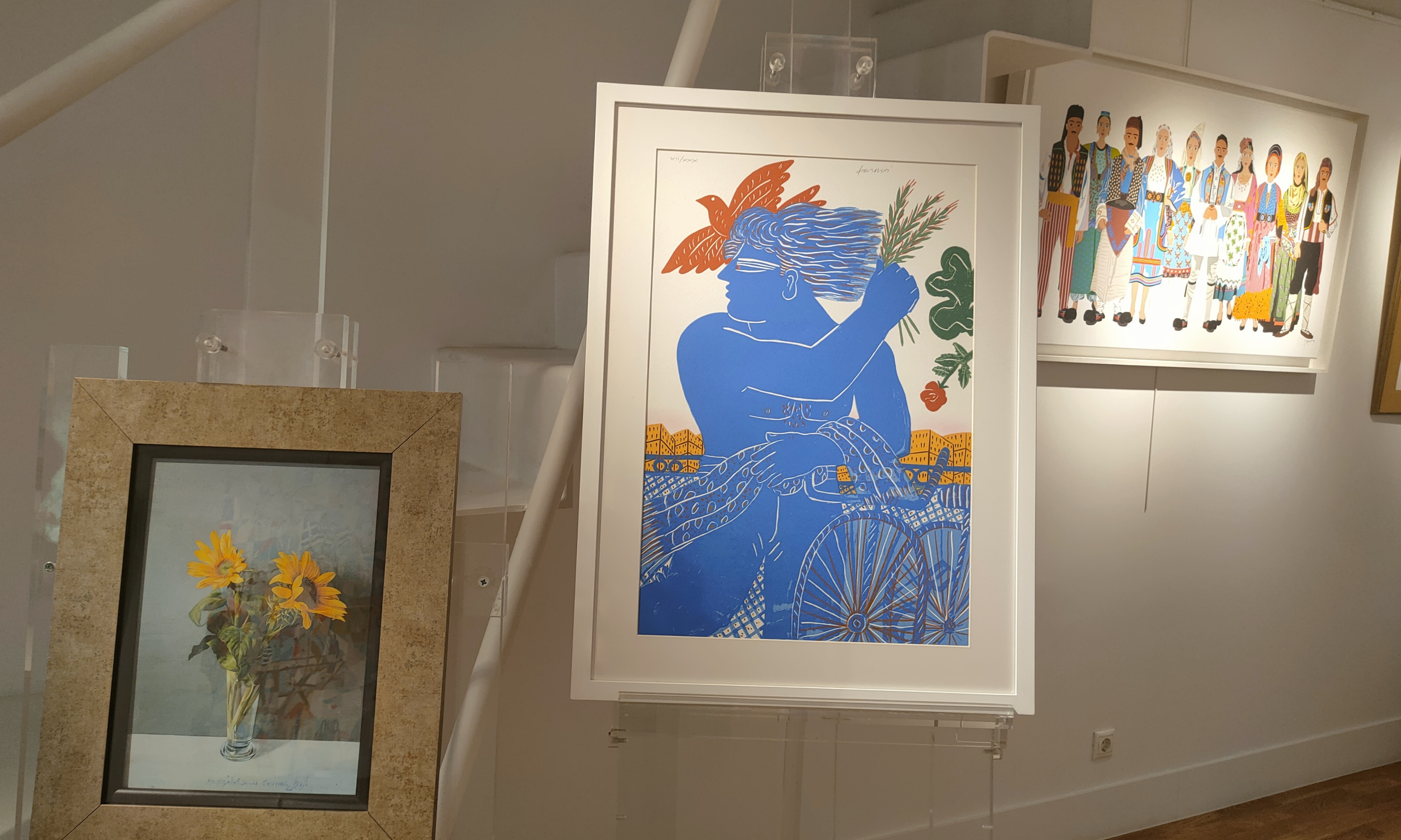
There is a wide variety of creativity on display.
Let me also ask you this, what words of advice would you give to someone who is thinking of investing or buying Greek art? How should they go about it?
I would say that it would be good to invest 20% in works of the 19th-20th centuries, but 80% in contemporary Greek art, because it will be a better investment in the future. The main professional galleries working in Greece do an excellent job of both promoting their artists both here and abroad. There are also many contemporary Greek artists who can look at foreign artists straight in the eye, and are on the same level in terms of quality and inspiration. Greek contemporary art deserves a boost.
And what about the Greek artists? What words of advice would you give them?
Their work needs to be seen, continuously. They need to be represented by a gallery that will show their work continuously. It’s no good to exhibit for a month and then disappear, and then exhibit somewhere else. Their work should be seen somewhere permanently. And there are many who visit Greece these days who want to see art, and love museum tourism. They will also visit galleries. So, if an artist’s work is represented by a gallery, and is permanently on show there, then it will be seen by these people. Participation in organized exhibitions at galleries which use all of the marketing tools and technology of today in order to promote the works of their artists, is important. The job of the artist is to create. The job of the gallery is to do all the rest.

Apart from an investment, what else is art?
Above all, art is an experience. People buy art in order to be pleased. It brings them pleasure. Most importantly, the art buyer has to like the work, and to enjoy the whole experience of spending time in a gallery. Then comes the question of whether it is a good investment.
- Tsantilis Art is on 5 Sekeri Street, Kolonaki, Athens 10671. Tel: 210-360-5337. Email: info@tsantilisart.com
- For more info visit the gallery’s site

 art scene athens
Thanks for that excellent interview Stella! So, Gallery Zygos – since 56, isn’t the oldest gallery in Athens – a statement of Ion Frantzeskakis. I had a look and the only thing I could find on line today is a Legacy website! (:-
LikeLiked by 2 people
Hello Catharina and I hope you are well, wish you a good Autumn season! I’m so glad you liked this interview. As to the issue which you have brought up, I’m afraid I can’t answer this for you. It’s something that needs to be explained by the owners of these establishments I suppose. However, it’s impressive that the Tsantilis family has been involved in art for three generations, with a 4th generation coming soon. Wish you all the best in your beautiful creative adventures!
LikeLiked by 2 people
Stella, I have confidence in what mr.Tsandilis says! Hope you’re fine too and that work may keep on bringing you joy!
LikeLiked by 1 person