THE IRENE PANAGOPOULOS COLLECTION has opened its doors to the public, offering viewers an inspirational cultural haven situated on the second floor of Magna Marine Inc. From the models of ships that one encounters when entering Magna Marine’s ground floor entrance, you are swiftly transported to a different world of artistic creativity and contemporary awareness upon entering the IYP Collection’s space, where the exhibition “Everything I Know Is a Borrowed Map” is currently on view. Curated by Akis Kokkinos, this exhibition showcases 49 works from the collection, and runs till April 2, 2027. Opening reception on Wednesday, May 20, 19.00.
The catalyst that sparked the collection’s development might have been some works that Panagopoulos’s father had given to his daughter, but then the 20-year development of this collection has allowed Irene Panagopoulos to explore many aspects of painting, sculpture, photography, new media, as well as folk and applied arts objects, historical documents, books and archives. And every collection has its own character, with this one paying particular attention to women artists and practitioners from the Greek Diaspora and the wider Mediterranean region, foregrounding networks of influence that have historically been overlooked or marginalized. This particular collection reflects its owner’s interest in art as an intersectional field of knowledge and inquiry. Because art isn’t a separate part of the world we live in, but a reflection of it, a comment on it, an exploration of it, a deeper understanding of it.
The IYP collection first opened its doors to the public in June 2025, and has been gathering momentum since. Fueled by the curatorial genius of Akis Kokkinos, the current exhibition “Everything I Know Is a Borrowed Map”, presents via six units, called ‘Marginalia’ (inspired by the term as it is used in map-making), a reflection, or meditation on the essence of collecting: on systems of knowledge and power, on the impulse to classify, preserve and dominate. This exhibition challenges us to reconsider the borrowed maps we carry – the inherited systems of thought, the cartographies of power, the hierarchies of value. And finally, it invites us to reimagine how we might navigate the world anew.
What follows, is a quick tour of this exhibition, with some of its ‘highlights’. But this is an exhibition which has been elaborately thought out, and which can easily be reread during another visit. Furthermore, other works from the collection may also be viewed on the sliding storage panels that are part of the space.
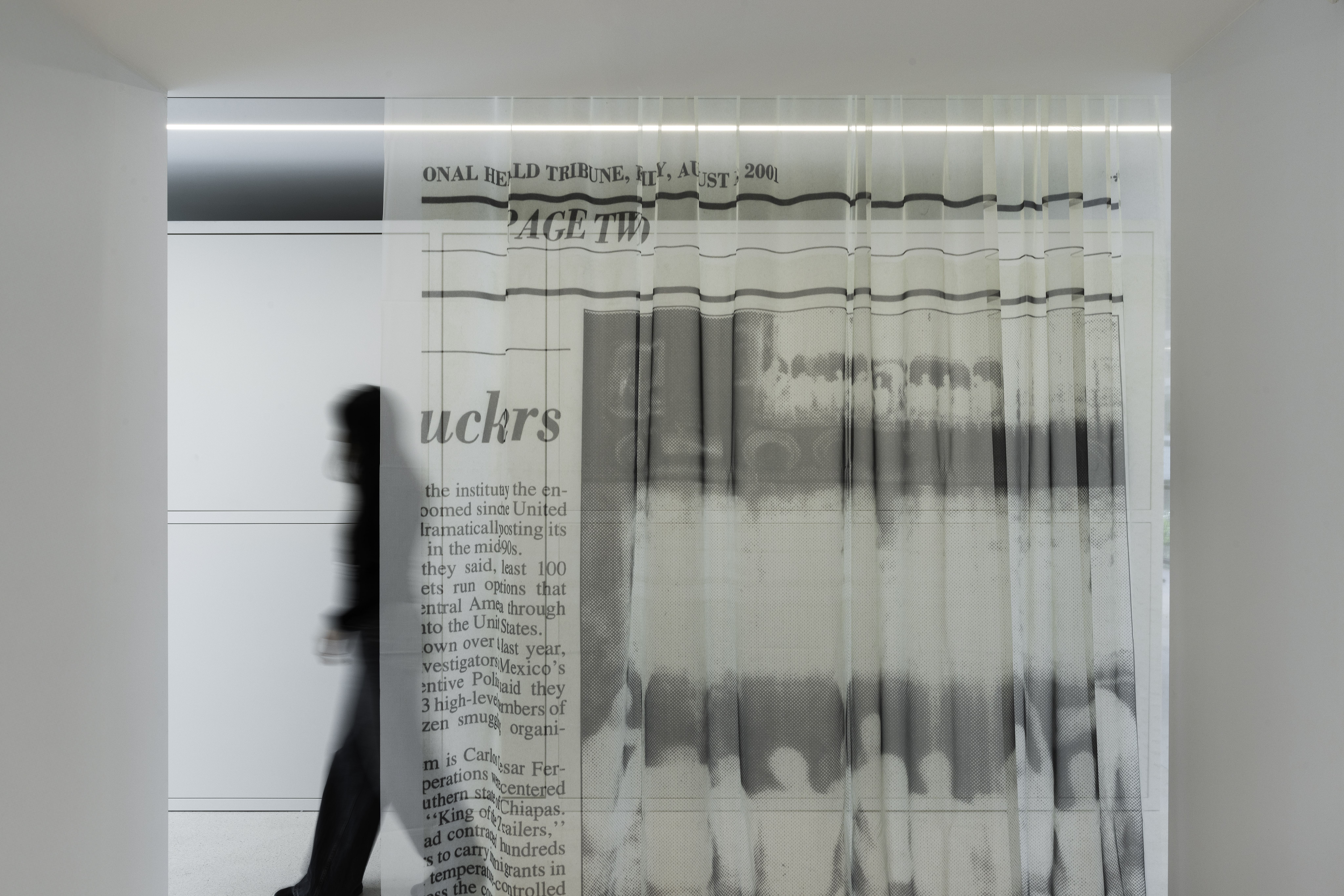
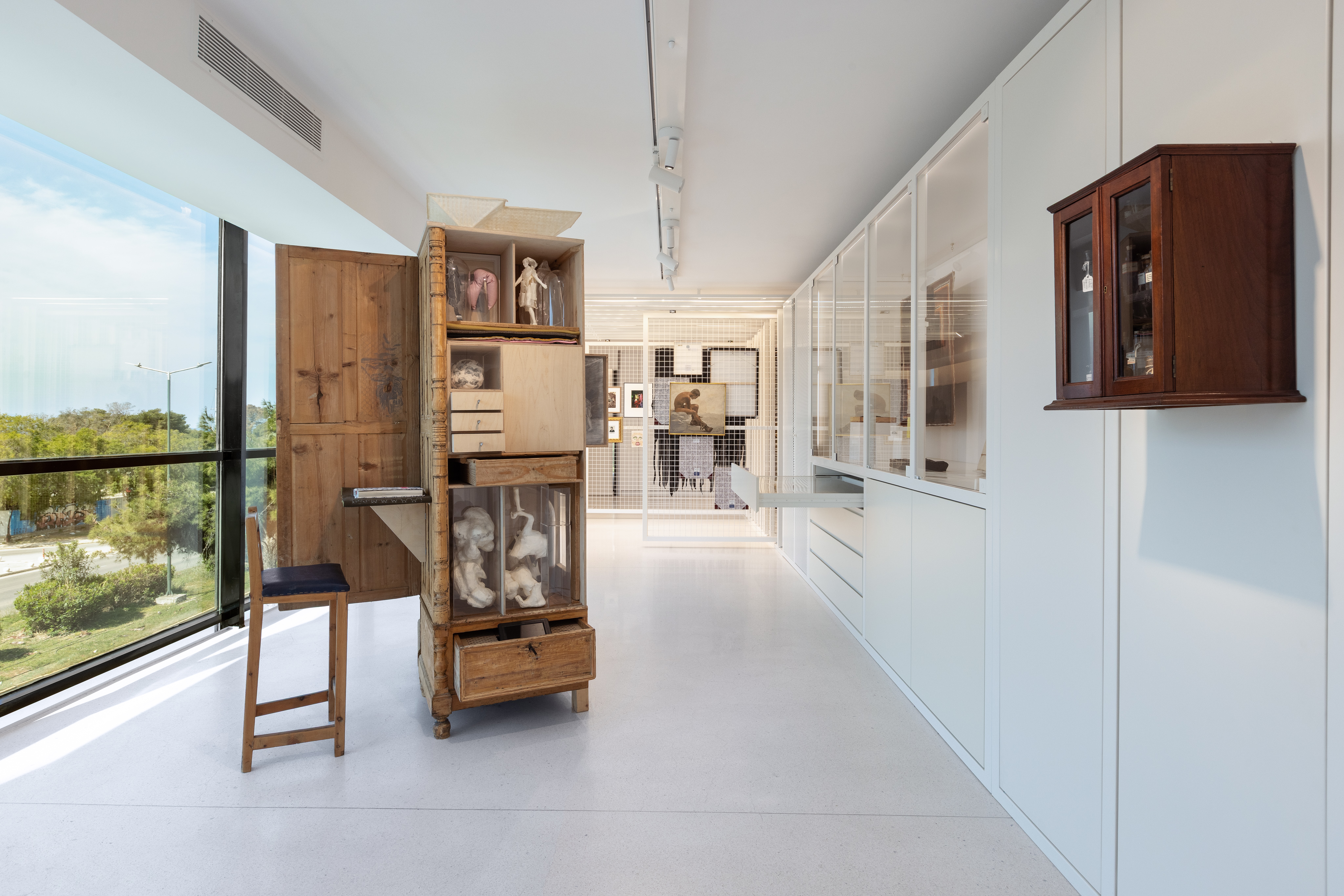
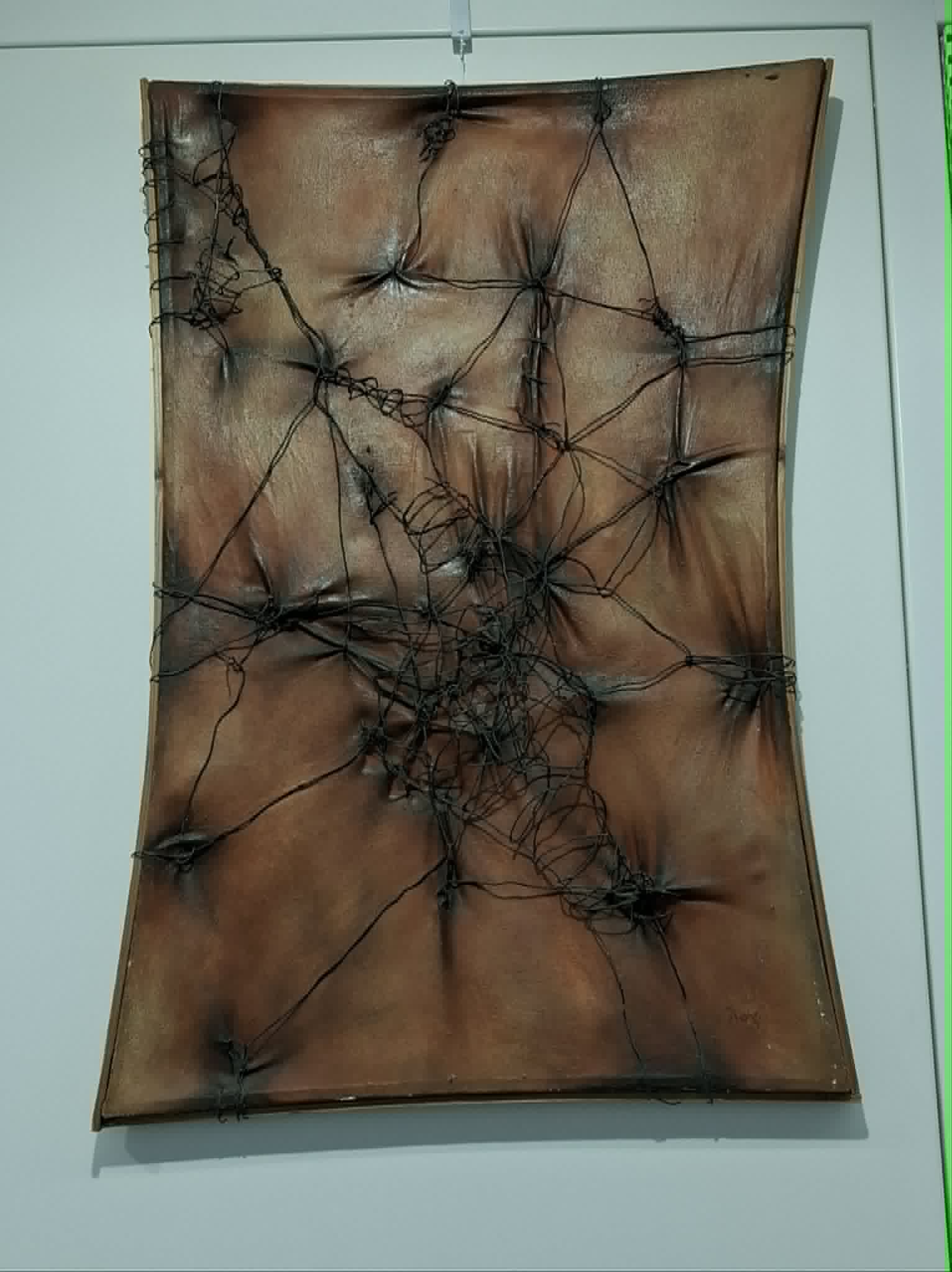
Mona Hatoum’s “Every Door a Wall” is the first work you encounter upon entering the exhibition, and has been given a solo showcase in the Marginalia I section, while in Marginalia II, the most imposing work is Maria Loizidou’s “Collective Autobiography”. The latter comprises of an early 20th century wardrobe, transformed by the artist into a system by which its interior is fully exposed. Packed with various objects and artworks, the wardrobe becomes a mini-museum about Loizidou’s artistic life. Opposite this work, is a wooden cabinet filled with 67 bottles of water collected from sacred springs around the world. This work, by Susan Hiller, points towards the essence of collecting. Also in this section, works by Christo, Daniil, Jannis Kounellis, Lucas Samaras and others, explore irrational, marginalized belief systems, proposing ambiguous and fragile forms of knowledge instead.
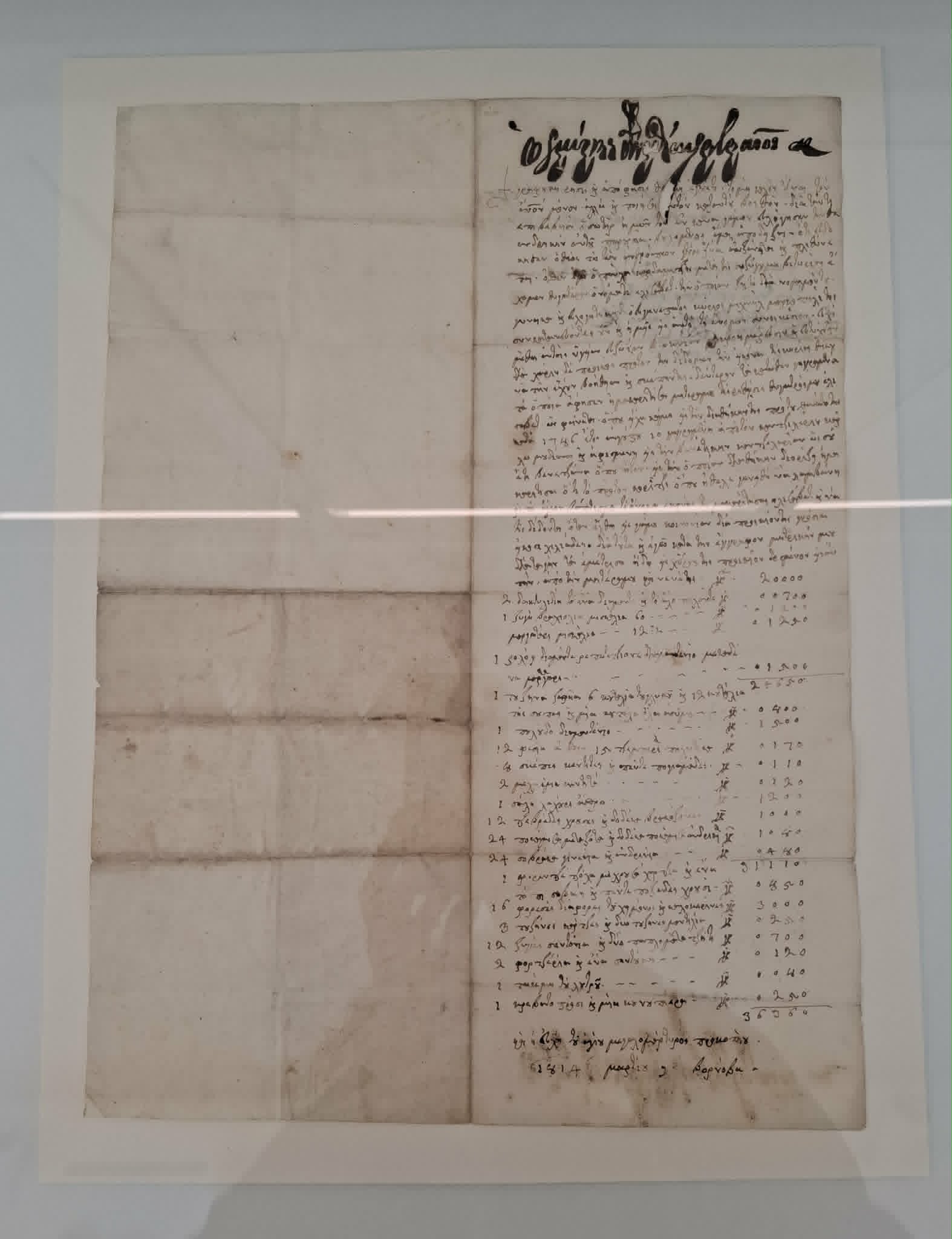
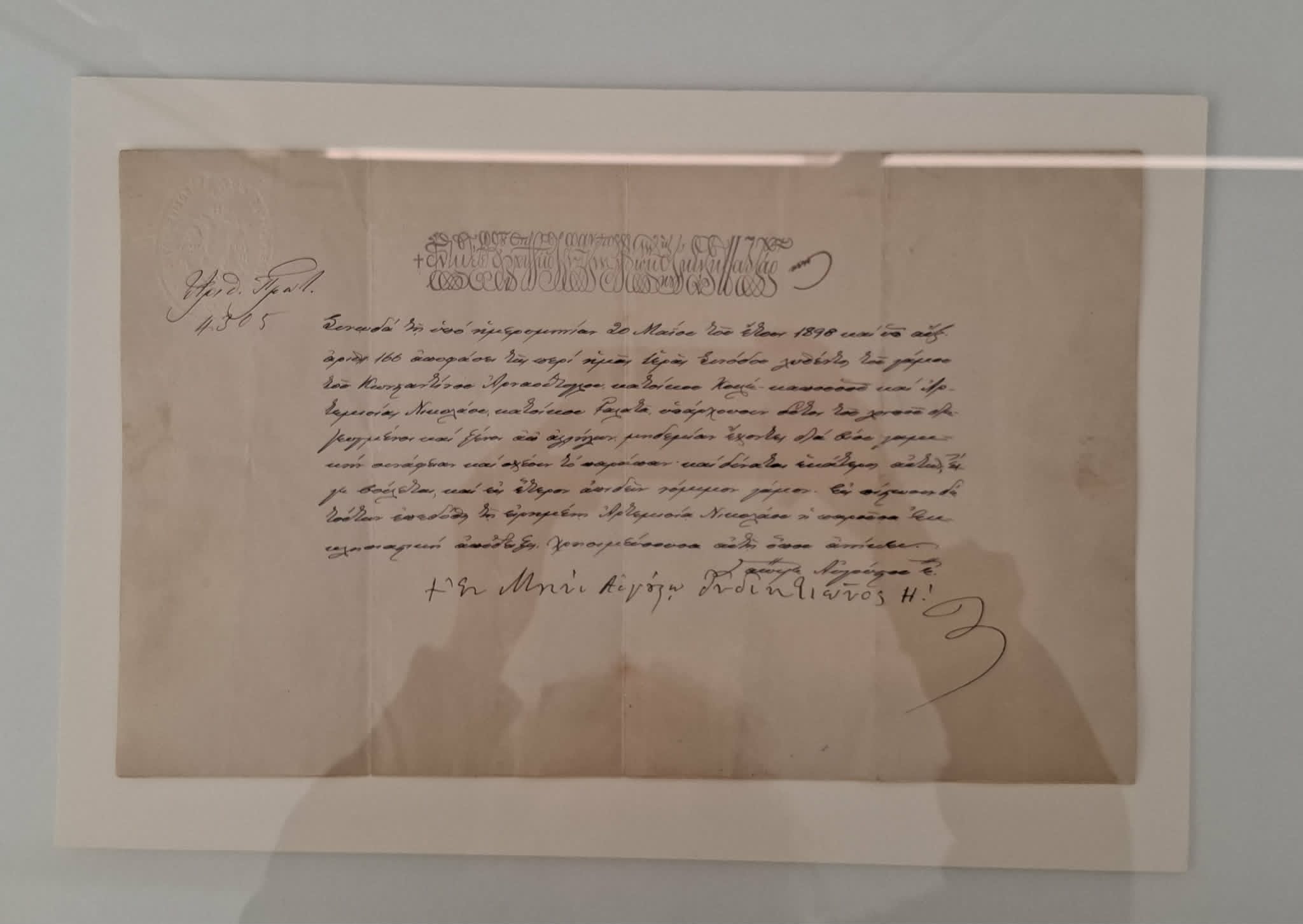
Two antique papers, a divorce paper from 1898 (hard to come by in those days), and a dowry agreement from 1814 (a prerequisite to get married in those days), add another dimension to the Marginalia II section of the exhibition. These two documents are discretely presented in a drawer.
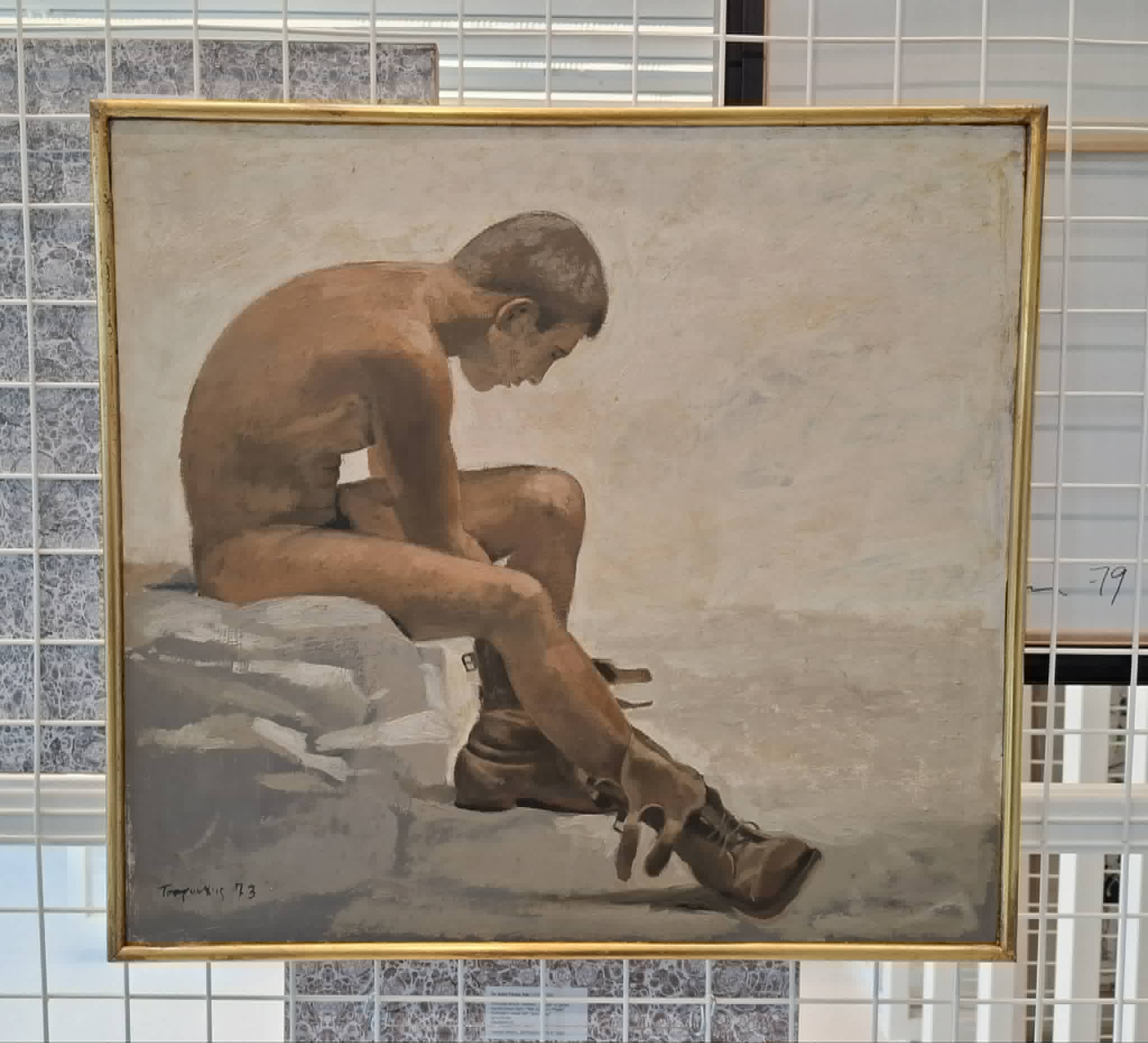
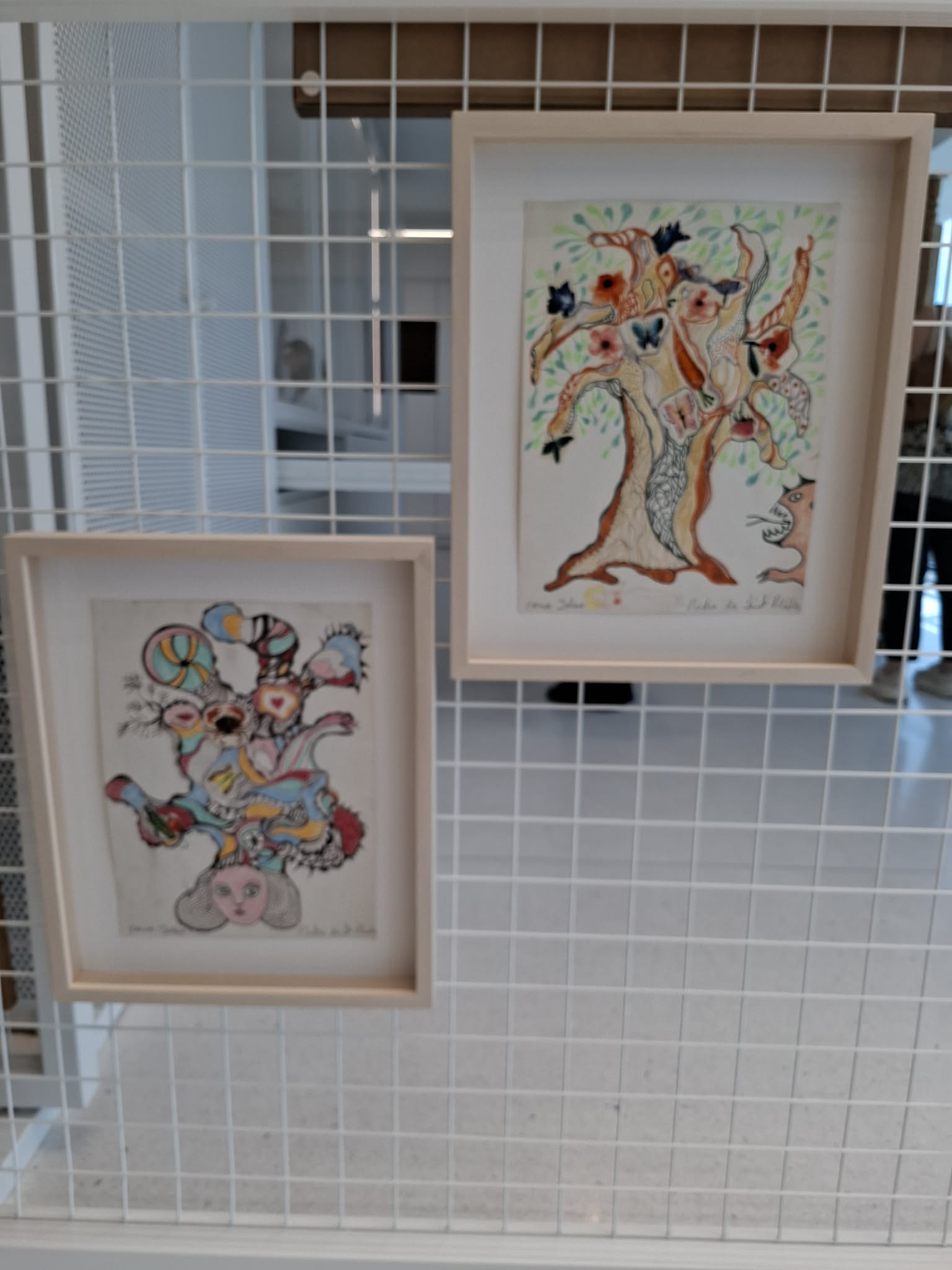
The exquisite work “Youth Putting on his Boots”, so tenderly executed via oil paint by Yannis Tsarouchis, is the first work you will encounter in Marginalia III, where what has remained hidden, suppressed, or marginalized, comes to the surface, particularly in relation to queer, feminist, censored or racial voices. An interesting dialogue between Andy Warhol’s photograph of Alexandre Iolas, and Niki de Saint Phalle’s works on paper “Pour Iolas” emerges. There is a careful juxtaposition of photographs in this section, eg Lucas Samaras’s colourful polaroid type photograph, and the black and white photograph of another time, by Willhelm von Gloeden (depicting an English garden scene with a boy and the sculpture “Kanaris at Chios”). Plus, Racine’s classic photograph of Cavafy. Notions of camouflage, identity and gender identity are explored.
In Marginalia IV, antique cartography is juxtaposed with landscapes of displacement: From the world of Captain Cook, to the embroidered landscapes of artist Jordan Nassar, or the Roman triumphal arch in Algeria, as photographed by Kader Attia, in the work “History of Reappropriation”. Human suffering is also poignantly addressed in a powerful work by Stathis Logothetis, in this section.
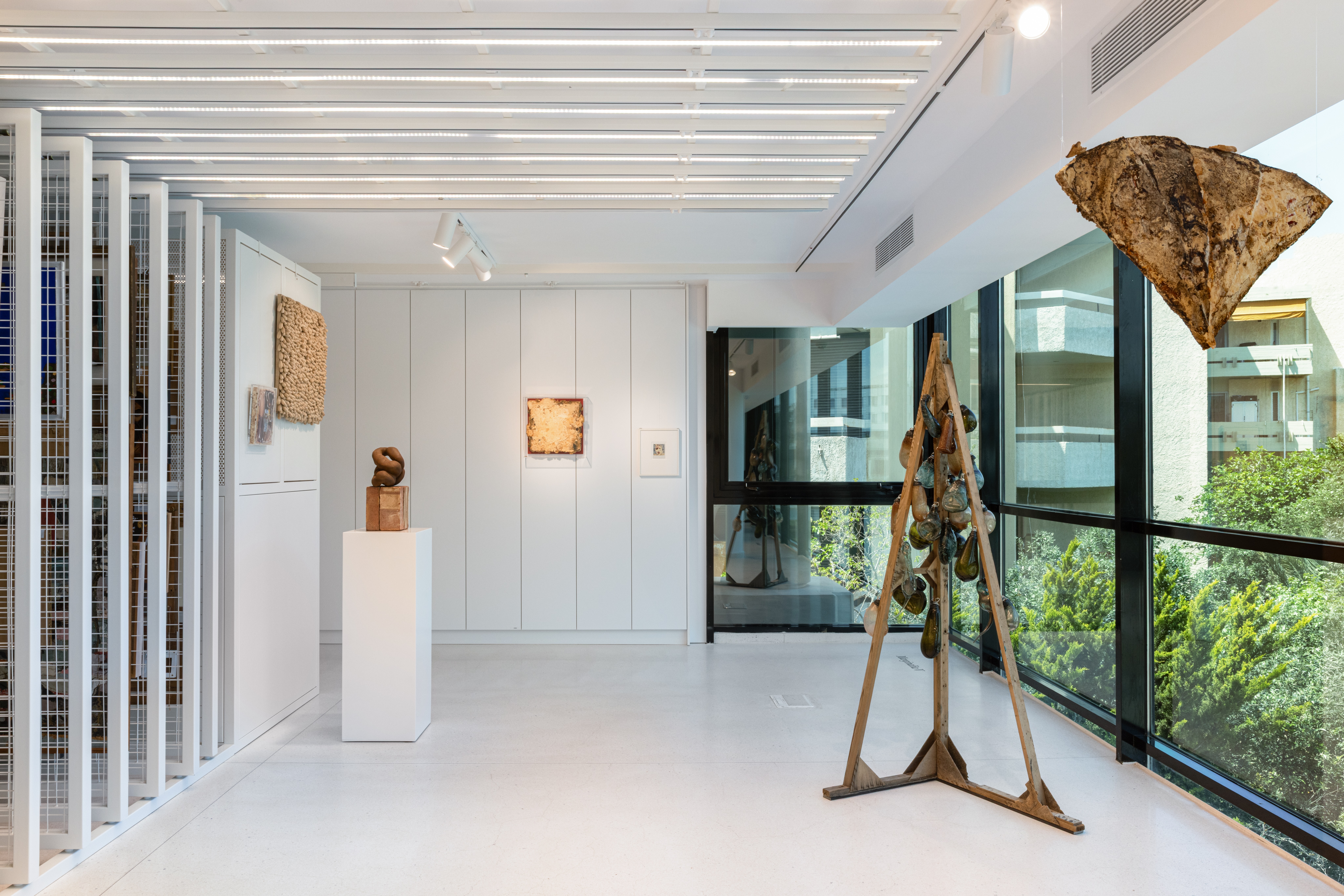
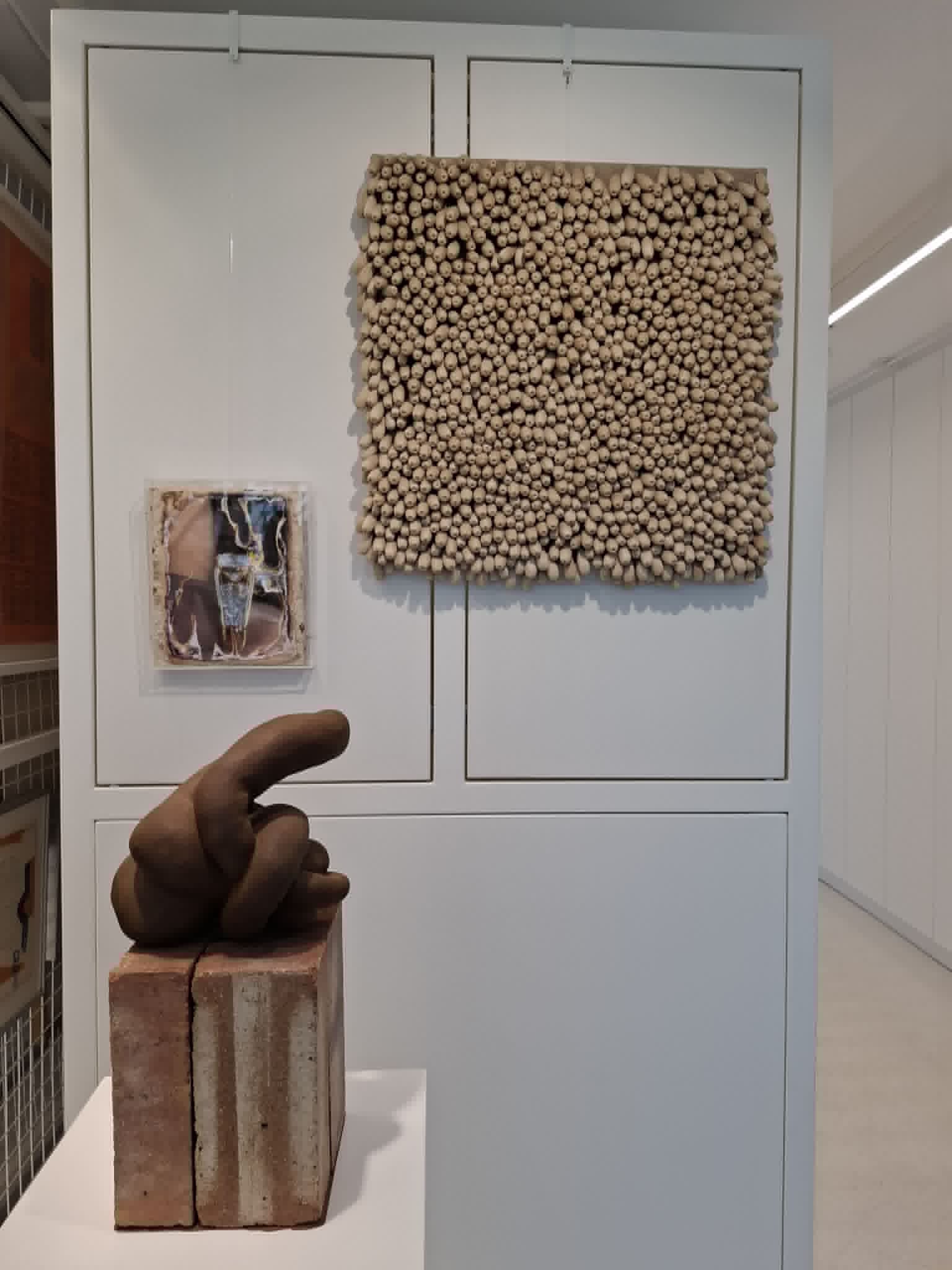
Marginalia V is where biological growth, movement, and sonic potential intersect. Among the works here, you will find Georgia Sagri’s “Breathing Scores”, which proposes breathing as a subtle form of resistance, via a large construction comprising clusters of blown-glass creations. Angelika Loderer’s “Causing Each Other” incorporates mushroom mycelium, which ensures the work’s organic change. Dozens of twisted linen forms resembling cocoons, or orchid buds, protrude from a work by Sheila Hicks. This section is about regeneration and growth.
The exhibition closes on a poetic note with Marginalia VI, where Anselm Kiefer’s “Die Donauquelle” (The Source of the Danube), evokes the origins of culture, history, and geography, and opens the possibility for a renewed reading of the exhibition. Meanwhile, two gold fish swim happily in an aquarium created by Haris Epaminonda. It reflects on how this exhibition space too, with its many glass windows near the sea of Athens’ southern suburbs, is also like an aquarium, where artistic voices can be heard, within the exhibition’s multifaceted, thought-provoking and enlightened conceptual prism.
Works by the following artists are on view in “Everything I Know is a Borrowed Map”:
Anthony Akinbola, Kader Attia, Thomas Bowen, Christo, Benedetto Civiletti, Haris Epaminonda, Simone Fattal, Wilhelm von Gloeden, Petrit Halilaj, Mona Hatoum, Sheila Hicks, Susan Hiller, Birgit Jurgenssen, Anselm Kiefer, Jannis Kounellis, Angelika Loderer, Stathis Logothetis, Maria Loizidou, Sarah Lucas, Nour Mobarak, Jordan Nassar, Melik Ohanian, Daniil (Panagopoulos), Racine, Ugo Rondinone, Georgia Sagri, Niki de Saint Phalle, Lucas Samaras, Sin Wai Kin, Takis, Jean Tinguely, Yannis Tsarouchis, Erika Verzutti, Andy Warhol, and anonymous.
The Irene Y. Panagopoulos Collection is on 146 Vasileos Pavlou Avenue, Voula 16673.
Exhibition duration: May 20, 2026 – April 2, 2027.
Opening Hours: Wednesday 11.00-19.00; Thursday & Friday 11.00-17.00.
Admission only with reservation at iypcollection.com. Free entrance.
For more, visit the collection’s site here
Email: info@iypcollection.com
Tel: 210-892-0282
Art Scene Athens’ is written/run by artist/journalist Stella Sevastopoulos. Dedicated to presenting what is happening on the Greek art scene (but not only), and also to giving Greek artists (and artists based in Greece) an international voice on the internet. For more on Stella Sevastopoulos’s art, click here If you would like to be featured in Art Scene Athens, please send email (stelsevas@yahoo.com).
 art scene athens