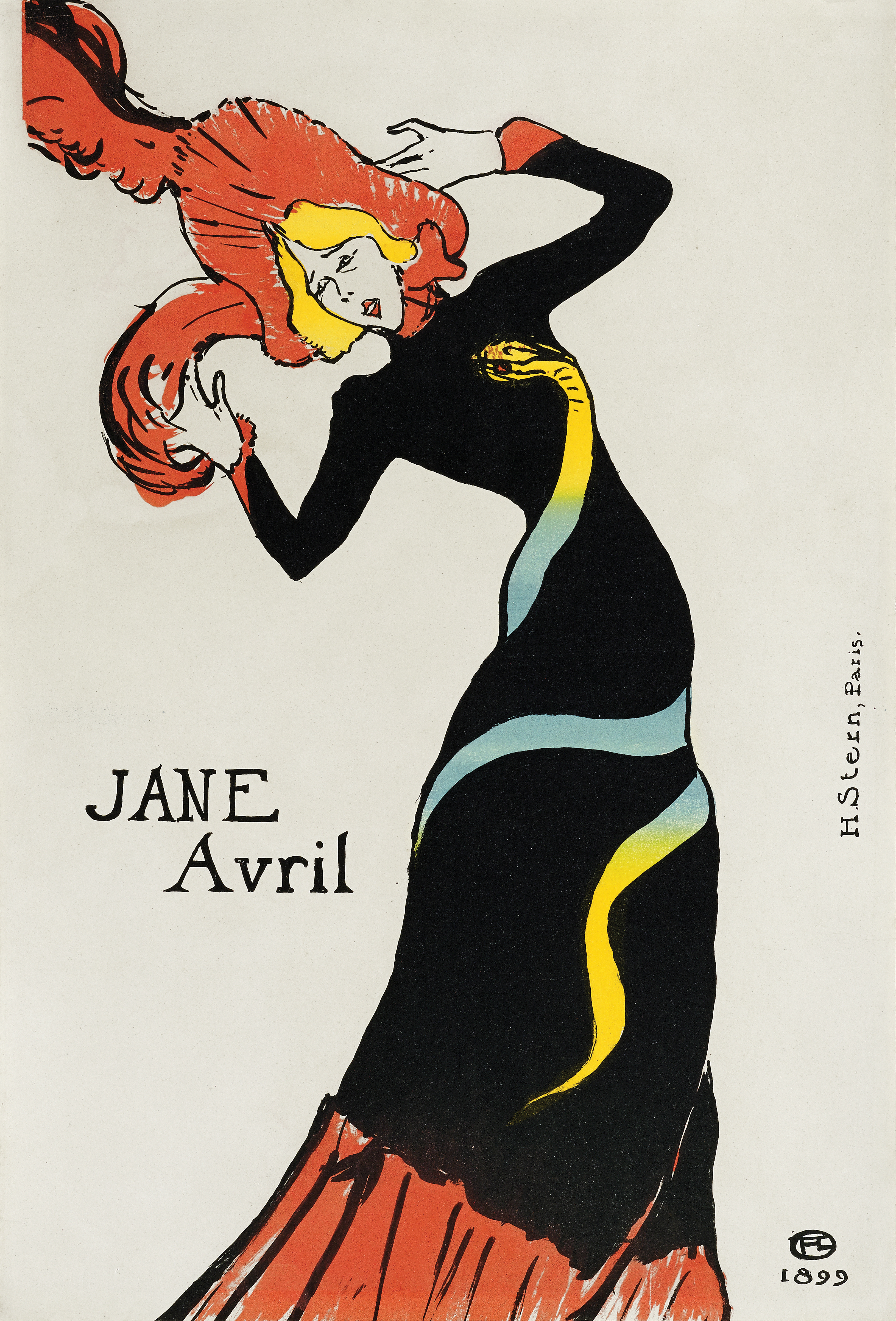
THE BASIL & ELISE GOULANDRIS FOUNDATION presents at its Museum in Athens, its major temporary exhibition BELLE ÉPOQUE, dedicated to one of the most fascinating yet contradictory periods in European history. Runs till February 15, 2027.
Focusing on Paris, the celebrated “City of Light”, the exhibition explores the Belle Époque through one of its most characteristic phenomena: the artistic poster. From the late 19th century onwards, posters began to take over the city’s streets, emerging as a dynamic new form of visual communication that would soon play a defining role in the development of both advertising and graphic design.
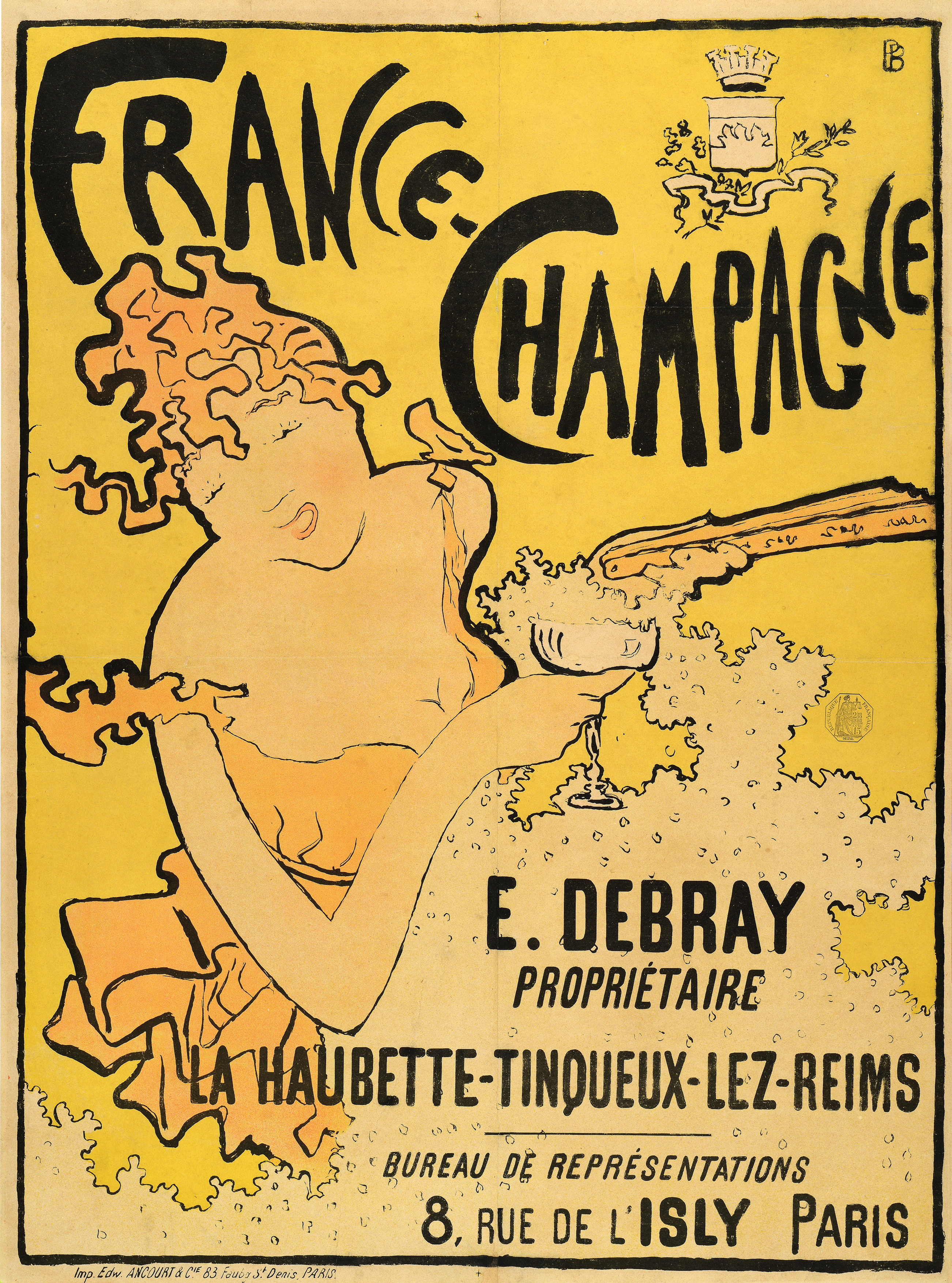
Printed by Ancourt, Paris
Approximately 90 works showcase the distinctive artistic vision of 15 significant artists, including Henri de Toulouse-Lautrec, Alfons Mucha, Théophile-Alexandre Steinlen, Pierre Bonnard, Maurice Denis, Félix Vallotton and Henri-Gabriel Ibels. The exhibition also features works by Jules Chéret, René Hermann-Paul, Émile Bernard, Claude-Émile Schuffenecker, George Bottini, Théo van Rysselberghe, Louis Anquetin and Wassily Kandinsky. Alongside the posters, the exhibition includes drawings, oil paintings and pastels.
Integral to the exhibition’s narrative, its scenography recreates the atmosphere of Belle Époque Paris. Focusing on the relationship between artistic posters and public space, the exhibition design evokes the image and pulse of the French capital, inviting visitors on a visual journey through the “City of Light”.
The exhibition focuses on the decades between 1880 and 1900, a period during which colour lithography reached new heights of technical refinement, posters spread throughout urban spaces on an unprecedented scale, and printed images assumed a leading role in everyday life. From advertisements for theatrical performances, cabarets and bicycles to emerging forms of consumption, transport and entertainment, the poster became a visual mirror of a society changing at an extraordinary pace.
Belle Époque Paris is a city in constant motion. Haussmann’s grand boulevards, electric lighting, the Métro, department stores, theatres, café-concerts and cabarets transformed everyday life and gave rise to a new urban culture. Posters followed this radical transformation, occupying every available surface across the city and turning the streets into an open-air gallery.
The artists featured in the exhibition did far more than illustrate a product or promote a performance. Through bold compositions, vivid colours and innovative graphic techniques, they brought the era’s aesthetic experimentation into the world of posters, helping establish the medium as an autonomous art form. The poster thus became much more than an advertisement: it became an ephemeral yet remarkably eloquent chronicle of contemporary life.
At the same time, the exhibition sheds light on the many, often conflicting, facets of the Belle Époque. Behind the image of a glamorous and carefree era lay stark social inequalities, the harsh living conditions of the working class, political and ideological conflicts, and profound changes that were reshaping modern society. Paris stood at the heart of these upheavals, reflecting the technological, industrial and social transformations unfolding at an unprecedented pace and radically altering living conditions. The Dreyfus Affair, the expansion of individual liberties, the flourishing of entertainment and the gradual emergence of a new consumer culture come together to form a far more complex portrait of the period.
The world of entertainment occupies a special place in the exhibition. Montmartre, the Moulin Rouge, the Folies-Bergère, café-concerts and theatres became hubs of social interaction, amusement and artistic experimentation. Their stars — dancers, singers, actors and performers — became instantly recognisable figures through the posters created by leading artists of the time.
The picture of the era is further enriched by a wealth of photographic material documenting Belle Époque Paris, most of it sourced from the Bibliothèque nationale de France (National Library of France) and the Musée Carnavalet – Histoire de Paris. These photographs place the artworks within their original urban context, bringing to life the streets, boulevards, crowds and everyday scenes of a city undergoing profound transformation. The exhibition also features numerous excerpts from films of the period, including the early films Les colleurs d’affiches (The Poster-Pasters) by the Lumière brothers and Défense d’afficher (Post No Bills) by Georges Méliès.
The Belle Époque is traditionally considered to span the period from 1880 to 1914, coming to an end with the outbreak of the First World War. The B&E Goulandris Foundation’s exhibition, however, focuses on the two decades from 1880 to 1900, when the artistic poster reached its height and the printed image redefined the relationship between art and everyday life.
BELLE ÉPOQUE invites us to rediscover Paris not merely as the mythical “City of Light”, but as a modern metropolis in the throes of feverish transformation — a city where art took to the streets and became part of life itself.
The exhibition is curated by Marie Koutsomallis-Moreau, Head of Collection at the B&E Goulandris Foundation and Marina Ferretti Bocquillon, Scientific Director Emerita of the Musée des impressionnismes Giverny.
The exhibition is accompanied by an extensive catalogue in three languages — Greek, English and French — featuring detailed entries and documentation on the artworks.
B&E Goulandris Podcasts
The B&E Goulandris Foundation’s podcast series “B&E Goulandris Podcasts: An audio dive into the enchanting world of Art,” continues with a special feature dedicated to the Belle Époque exhibition.
This new instalment comprises three episodes. The first explores the Belle Époque as a period that profoundly transformed French society, everyday life and the image of Paris, amid far-reaching social and cultural changes. The second examines the emergence of a new visual language that transformed the streets of Paris and the birth of modern advertising, while the third focuses on Athens during the same period.
Contributors include Marie Koutsomallis-Moreau, Head of Collection at the B&E Goulandris Foundation and co-curator of the exhibition; visual artist and exhibition scenographer Andreas Georgiadis; visual artist and graphic designer Kanella Arapoglou; journalist and author Nikos Vatopoulos; and Amalia Kotsaki, Professor of History and Theory of Architecture.
The podcasts are available from October 31 on all platforms (Spotify, Apple Podcasts, YouTube Music, etc.), at goulandris.gr and onsite at the exhibition through QR codes.
Information:
Curators:
Marie Koutsomallis-Moreau, Head of Collection at the B&E Goulandris Foundation
Marina Ferretti Bocquillon, Scientific Director Emerita of the Musée des impressionnismes Giverny
Exhibition design:
Paraskevi Gerolymatou, Andreas Georgiadis
Exhibition dates:
October 31, 2026 – February 15, 2027
Opening times: Monday, Wednesday, Thursday, Saturday & Sunday 10.00-18.00
Friday 10.00-20.00
Closed on Tuesday
Basil & Elise Goulandris Foundation
13 Eratosthenous, Athens 11635
Τ: +30 210 725 2895
visit@goulandris.gr | goulandris.gr