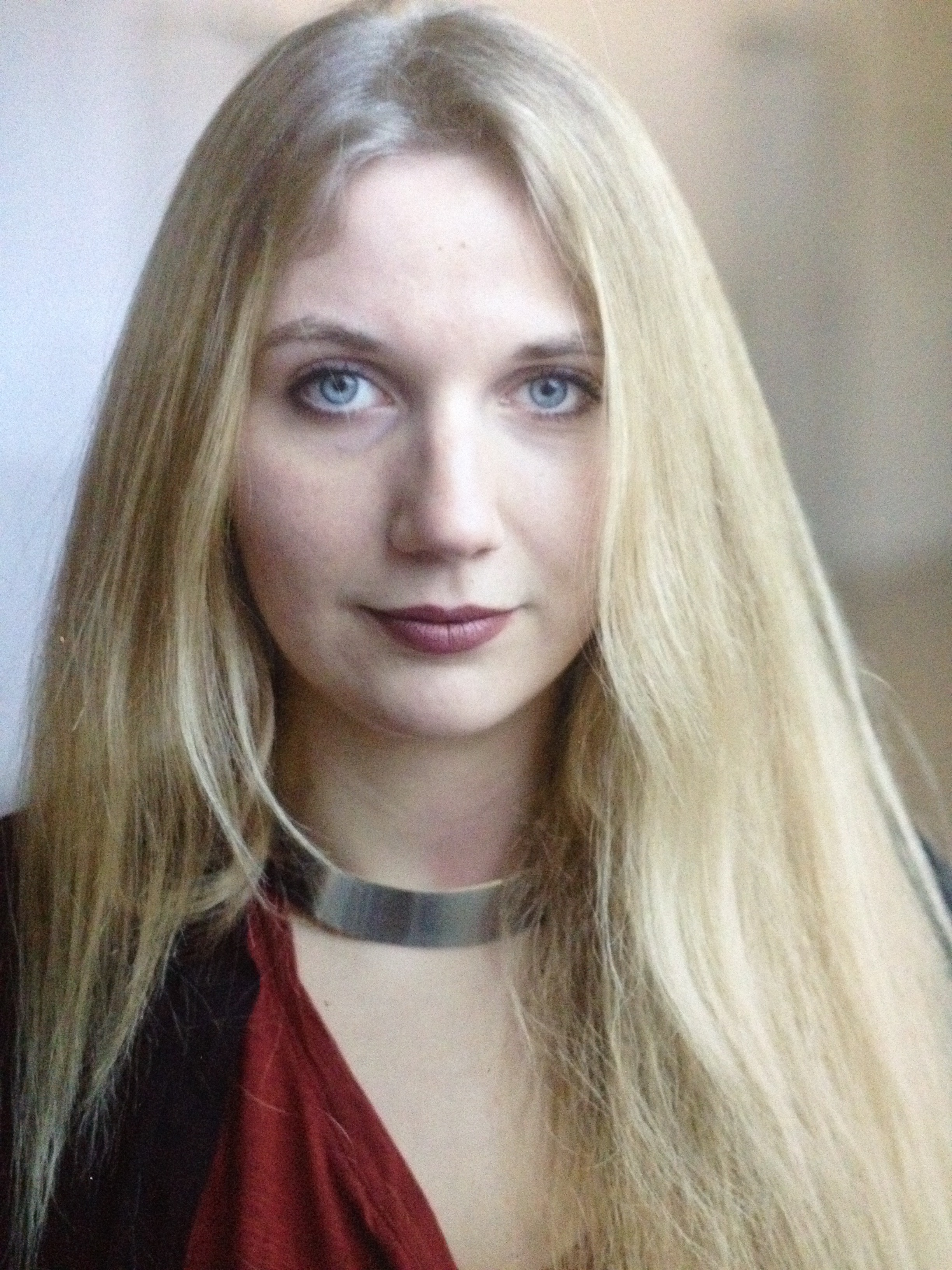
Stella Sevastopoulos catches up with artist/ceramist Roxanne Brennen to talk about the art of ceramics, plus her new project at Pelagos Restaurant at Four Seasons, and her upcoming solo exhibition at Okupa.
THE CERAMIC creations of Roxanne Brennen lie on the cusp between art and design, between applied art and high art. Her plate creations elevate the whole dining experience, adding a unique aesthetic perspective to the sensory delight offered by culinary creations. Her new bespoke ceramic range specially created for Pelagos Restaurant at the Four Seasons Hotel, inspired by the sea and sea forms, will become part of the chic eating experience there. It is her second bespoke series created for a restaurant, her first being for the Valaora restaurant in Nafplio. However her ongoing Crying Plates series, will soon become part of an exciting art exhibition powered by Glenda Lorenzani’s Domus Art Gallery, and taking place at Okupa in the Kerameikos district of Athens. And this series shows how Brennen goes beyond the boundaries of ceramics, exploring a whole host of other issues about the human condition, transforming the dining plate into a particularly intriguing vessel for emotional release in the process.
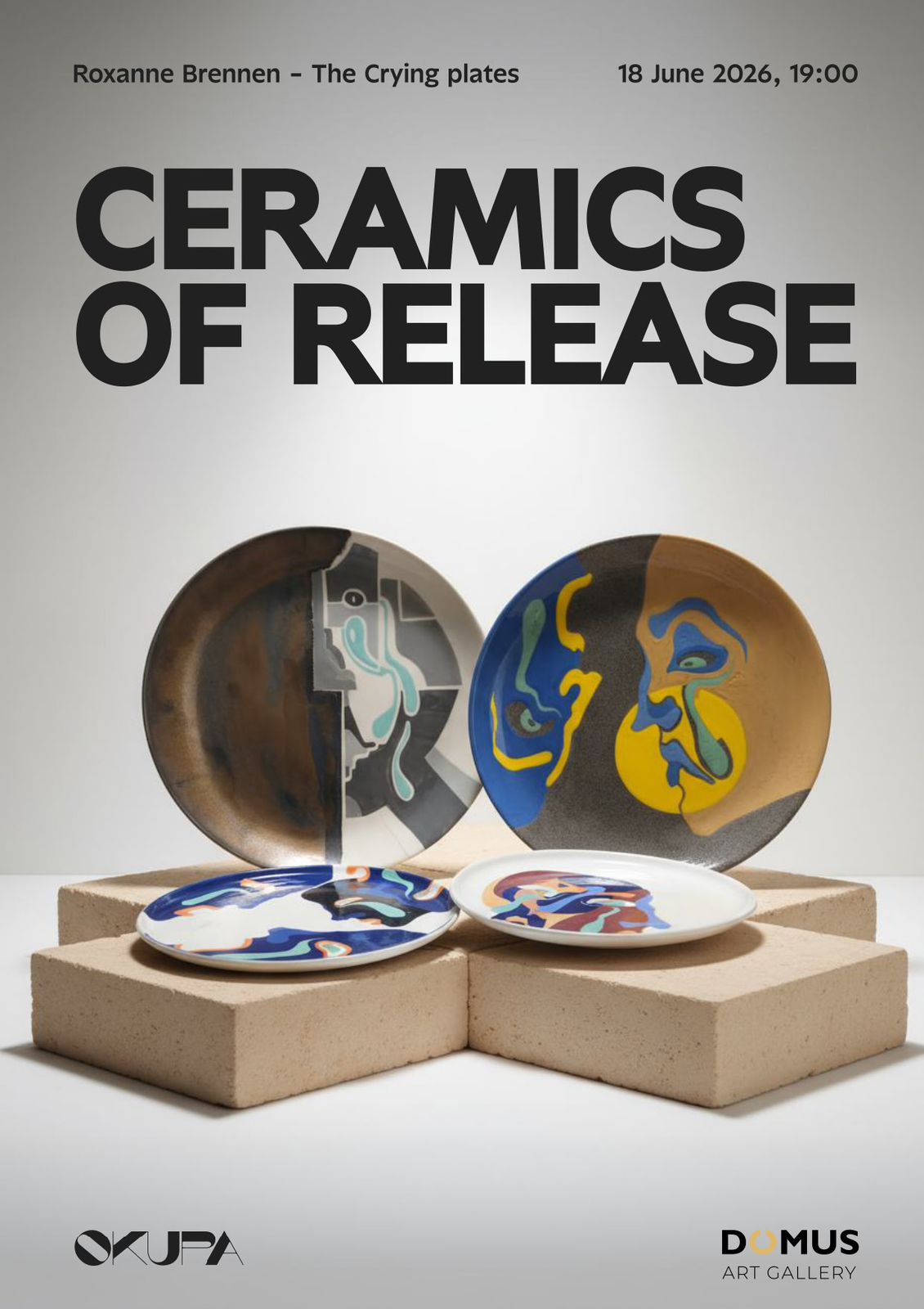
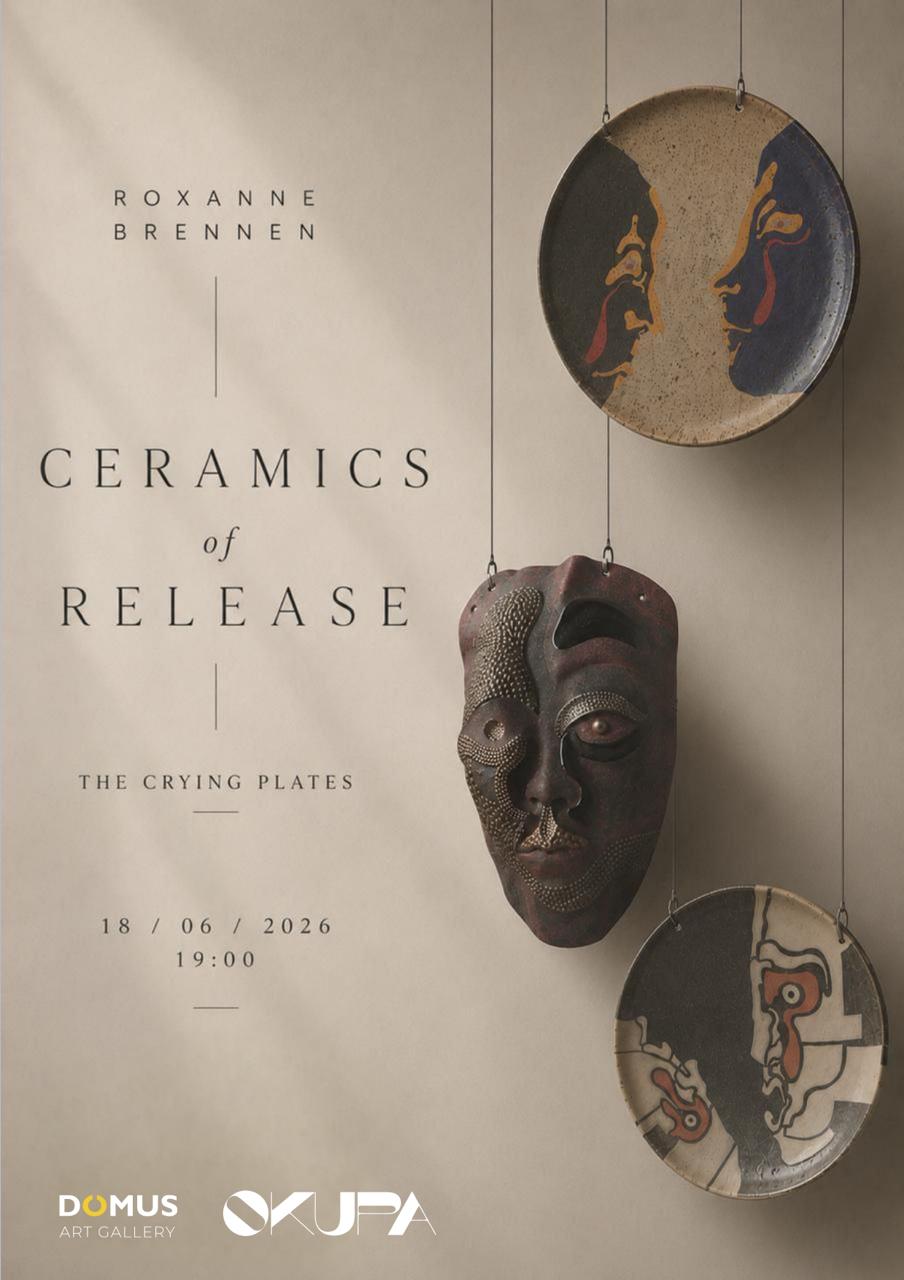
The Crying Plates, part of the ongoing project Ceramics of Release, is a body of work presenting a series of handcrafted stoneware plates painted with expressive crying faces. Existing between sculpture, design, and functionality, each plate becomes a quiet portrait of emotional release, exploring the relationship between body, emotion, and everyday ritual. These unique manifestations of human emotional release and catharsis, will be exhibited for the first time at Okupa. The Ceramics of Release – The Crying Plates exhibition opens to the public on Thursday, June 18, 7pm. A performance is also planned for July 2, midway through the exhibition. In this way, the project will be activated through a special sound bath experience by Nikolaos Unalome, creating an immersive encounter between sound, reflection, and the emotional landscape of the works.

Okupa is a unique urban hub, where visitors can enjoy a meal at the Kitchen & Listening Bar, whilst listening to global sounds curated by handpicked music selectors. It is also a boutique hotel. Furthermore, Okupa’s art space has embraced contemporary artists and their creations via its ongoing series of exhibitions, thus providing visitors with an all-round experience.
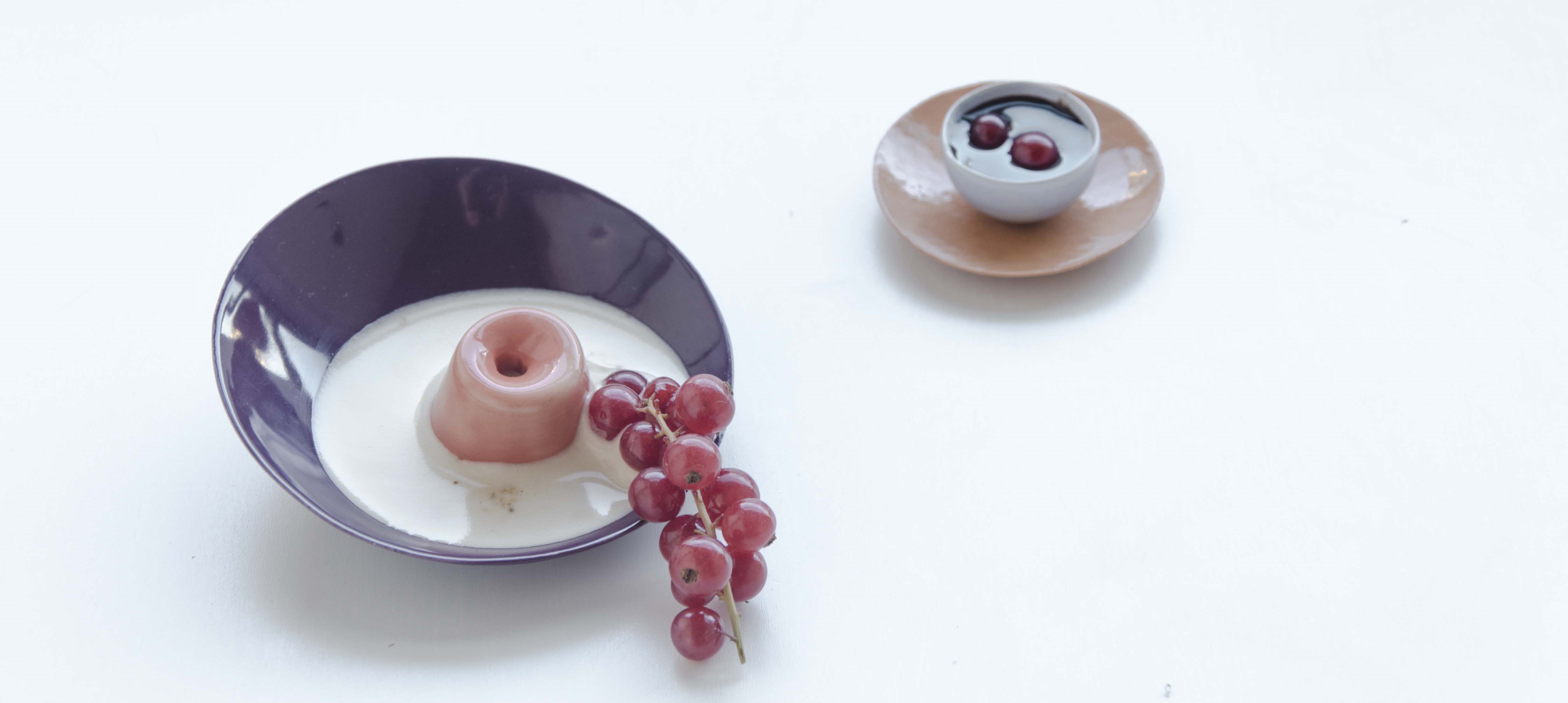
Brennen has studied and explored the experience of eating from many facets: from a scientific point of view, sociological, historical, psychological, behavioural, cultural point of view also. Consider the different ways that people gather and eat across the globe, with so many different cultures and etiquettes. Eating is an important ritual in all cultures, and Brennen has tried to add other aspects to this ritual through her artistic tableware creations. In the past, her series Dining Toys of delicate ceramics added sensuality and sexuality to the act of eating, but now, the current robust Crying Plates series speak of transformative tears.
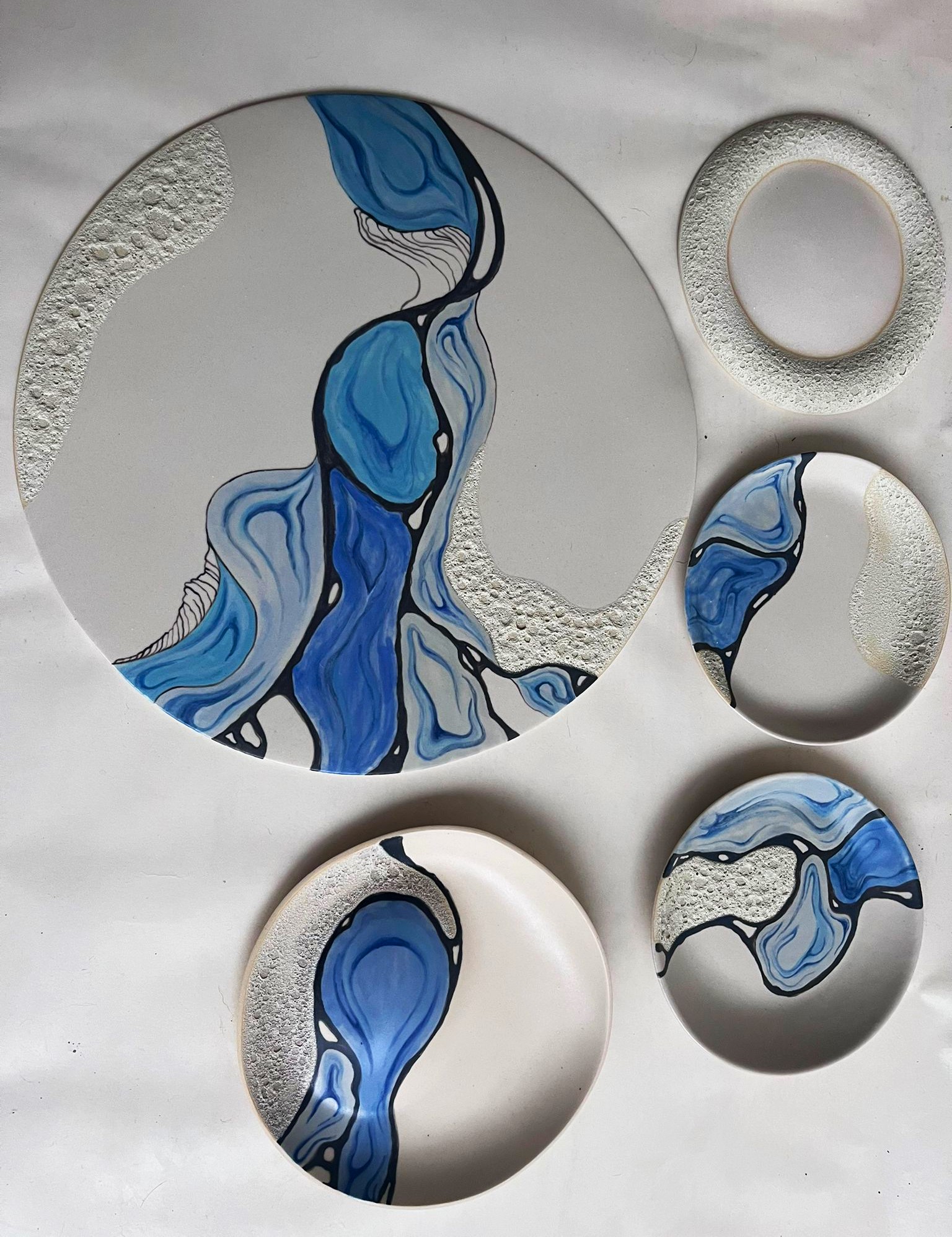
Brennen’s indepth exploration of her material, that of clay, and its relationship and reaction to different glazes, paints, firing processes, together with the organic designs she imbues on many of her pieces, has allowed her to create different series of works throughout her oeuvre. From ceramics imbued with designs that speak of primordial geometric and spiral patterns, to the thin and fragile pieces of the Dining Toys series, to the sea forms that have inspired the tableware of Pelagos, one witnesses the work of a versatile, explorative and constantly evolving artist. The Crying Plates series however, is where high art and ceramics have truly joined forces and where aspects from her previous explorations also conjoin.
The face designs on the Crying Plates series, are organic and primordial, with a touch of geometric abstraction also included in some, yet they could also have been inspired by the faces painted by Picasso or Matisse. These one-of-a-kind stoneware pieces, each one individually hand-made and hand-painted, are essentially functional artworks that embrace the act of emotional release via their myriads of design forms. The faces seem to be melting, but the designs are perfectly balanced. The colour palette used on each plate is carefully chosen, combining earthy tones with touches of vibrant turquoise, yellow, red or orange. To eat on such a plate seems almost sacrilegious, yet it is also an invitation to experience Brennen’s ongoing conversation between clay, emotion and time.

What follows is an interview with Roxanne Brennen, where she explains more:
– Firstly, tell us about your ceramics ‘journey’: how did you start? Your studies etc
I studied Conceptual Design at the Design Academy Eindhoven in the Netherlands. One of my graduation projects explored new ways of eating and the relationship between food and the release of endorphins. For this project, I worked with ceramics.
What I loved about conceptual design was that the medium for the final outcome would always change depending on the idea behind the project. Through this process, I discovered a real connection to clay and became fascinated by the possibilities of ceramics. Although I had been introduced to ceramics before, it was during my graduation project that I truly fell in love with the material and its creative potential.
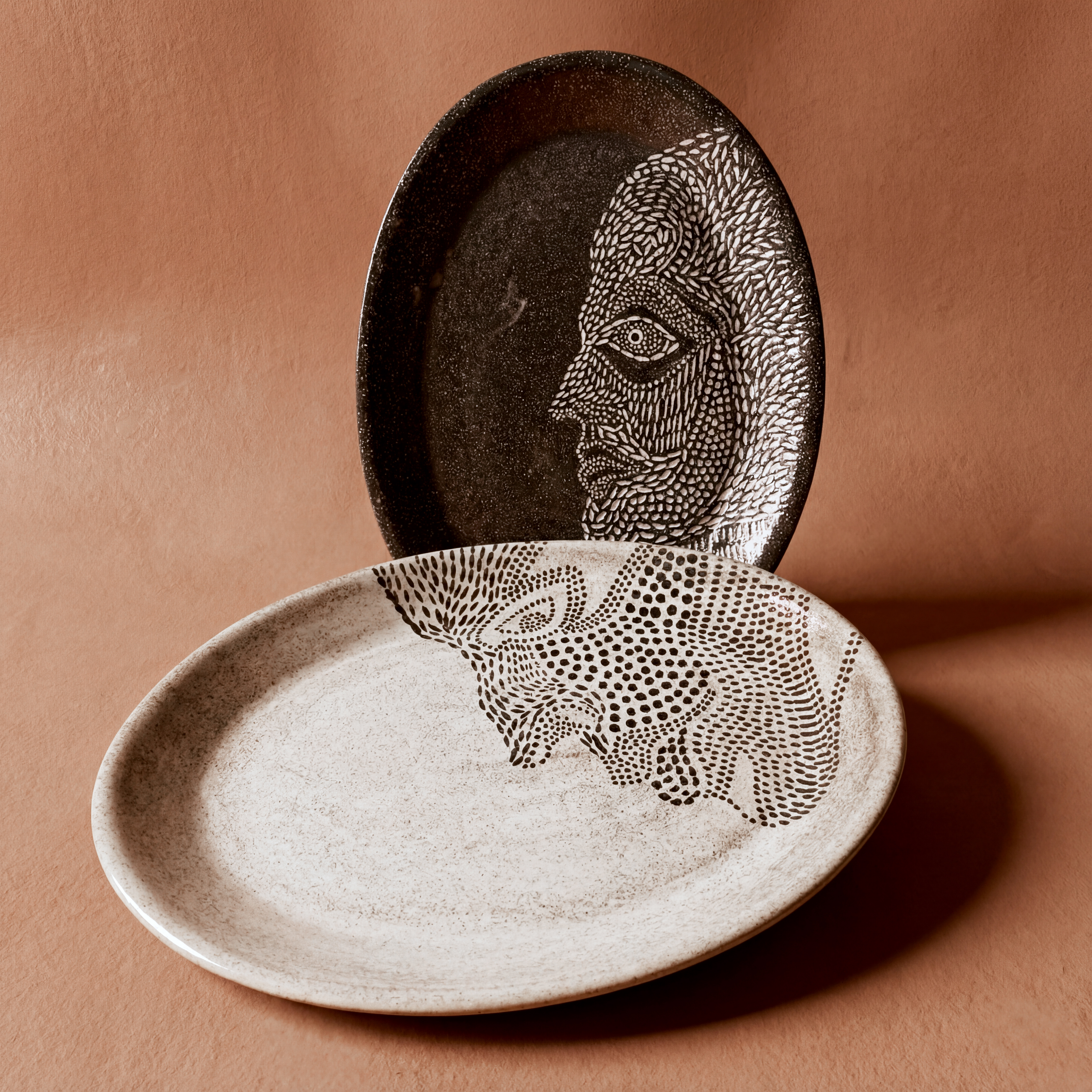
– Tell us about the project at Pelagos and how it came about.
I have created the presentation plates for the new menu, inspired by the sea. I wanted to design modern, artistic plates that evoke the movement and feeling of the ocean without representing it in a literal or realistic way. The pieces are intended to create an atmosphere and sensation rather than serve as an exact depiction of the sea.
–The Crying Plates, will be exhibited at Okupa. This is an ongoing series, and the first step of a bigger project in which you explore the release of emotion. Crying faces are an unusual subject to depict on a plate. Tell us how the act of eating and the act of crying are connected. Certainly we eat our emotions, so is this a way of releasing them instead?
The Crying Plates can be read as a counterpoint to the idea of “eating our feelings.” While emotional eating often describes the act of internalizing emotions, soothing discomfort through food, or avoiding difficult feelings by consuming something else, The crying plates proposes a different relationship between nourishment and emotion.
The project places emotions directly on the plate, making them visible rather than hidden. Instead of swallowing sadness, grief, frustration, or vulnerability, the crying faces invite us to acknowledge these feelings and give them space to exist. The tears are not consumed or erased; they are witnessed. In this sense, the work shifts the focus from emotional suppression to emotional expression.
The plate’s familiarity is central to the meaning of the work. As one of the most common objects we encounter every day, it becomes a powerful vehicle for challenging the idea that tears should be hidden or considered taboo. By placing crying faces on an object associated with ordinary routines and shared rituals, the project normalizes the act of crying and presents it as a universal human experience rather than an exceptional moment of weakness. The tears become part of everyday life, visible and unapologetic.
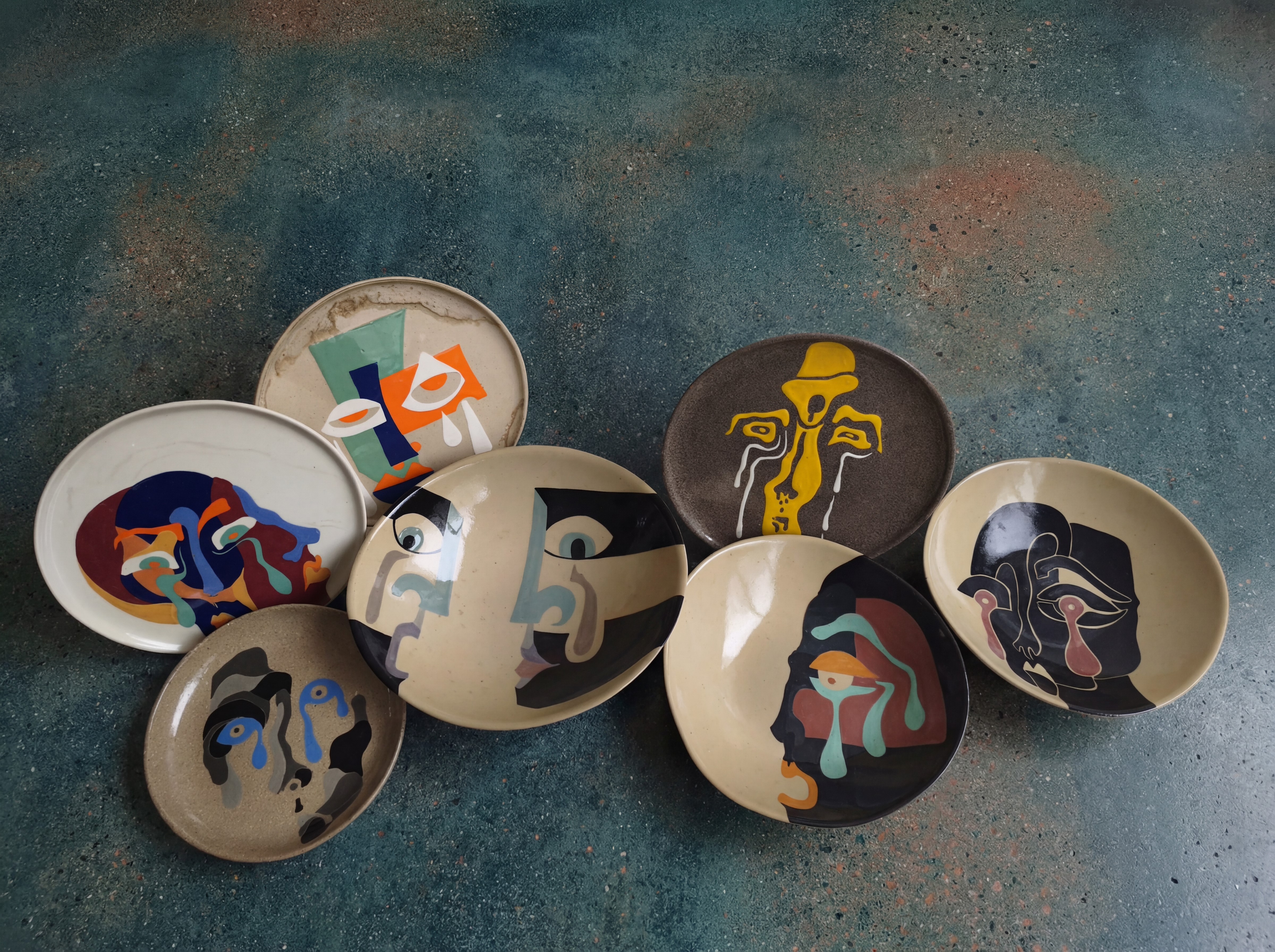
– The plate is also deeply connected to rituals of nourishment and care. So why place tears on it?
Every meal is a repeated gesture of sustaining the body, whether we eat alone or gather around a table with others. Plates are present in moments of hospitality, comfort, celebration, and connection. By associating tears with this object, the work suggests that emotional expression deserves the same attention and care that we give to physical nourishment. Just as food is essential for the body, the release of emotions is essential for our well-being. The plate becomes a symbolic space where care extends beyond feeding the body to include acknowledging, holding, and honoring our emotional lives.
In this way, the commonness of the plate amplifies the gesture of depicting tears. The work proposes that vulnerability is not an exception to daily existence but one of its most fundamental and shared realities. Just as everyone eats, everyone cries. By bringing tears to the table, the crying plates invites us to recognize emotional release as something common, necessary, and worthy of being seen—a ritual of care, transformation, and renewal that belongs within the everyday fabric of life.
– What has influenced your ceramic creations? Where do you get your inspiration?
My ceramic creations are deeply influenced by my emotions. I have never felt that there was one single source of inspiration, because everything we see, experience, and feel becomes part of us and inevitably finds its way into what we create. Memories, conversations, landscapes, moods, and even fleeting sensations all leave traces that unconsciously shape my work.
– How would you describe the ceramic-making process?
Working with ceramics feels intimate. Clay is a material that responds directly to touch, pressure, rhythm, and movement, which makes the creative process feel almost instinctive. When I work, I rarely begin with a completely fixed idea. Instead, I allow the material to guide me. What fascinates me about ceramics is this dialogue between control and surrender. Although I shape the clay, the material also resists, reacts, and transforms throughout the process.
– What techniques and methods do you use?
Most of my pieces are handbuilt, as I enjoy the direct and tactile relationship this technique creates with the clay. Handbuilding allows me to work intuitively and gives each piece a unique character, shaped by gesture, movement, and emotion. I appreciate the organic imperfections and individuality that emerge through this process, as they reflect the human touch behind the work. At times, when a larger quantity of a specific piece is needed, I create molds in order to reproduce certain forms more consistently.
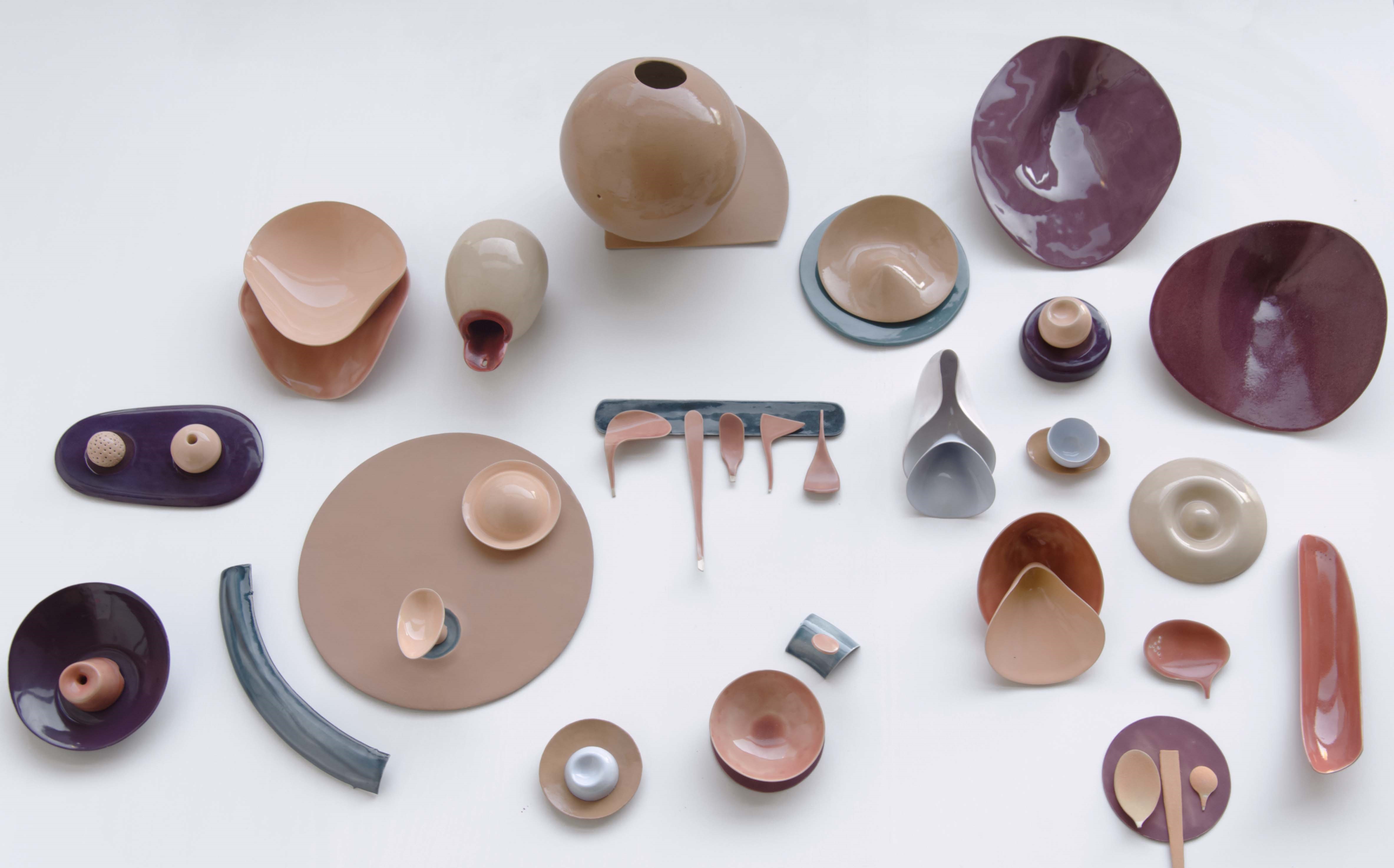
– How have your ceramic creations changed over the years?
To be honest, my ceramic practice is evolving a lot at the moment. What I have started to realize is that I am increasingly drawn to combining shaping, painting, and texturing within the same piece. I am interested in how these three elements can coexist and interact in symbiosis, each one influencing and enhancing the other to create a richer and more layered object.
At the moment, this exploration still feels very new and instinctive. I am in a phase of experimentation, trying to understand how far these techniques can be pushed together and what kinds of emotions or atmospheres they can create when combined. Because of this, the work is still developing, and I feel that more pieces need to be created before I can fully understand where this direction will lead me. That sense of discovery and evolution is also what makes the process exciting.
– Has Greece been an influence in your work?
Greece has always felt like an emotional home to me. I am not sure I can say that it has influenced me aesthetically in a direct or identifiable way, because, as I mentioned earlier, I do not feel that my work is shaped by one specific source or visual reference. What I create comes more from who I am as a person and from the accumulation of experiences, emotions, and impressions that become part of me over time.
Because Greece holds such strong emotional value for me, it undoubtedly influences my work, even if I cannot clearly define how. It is more of an atmosphere, a feeling, or a sensibility that exists beneath the surface of what I create. What moves me deeply about Greece is the constant coexistence of beauty and hardship. There is something powerful in the way fragility and strength, lightness and struggle, can exist side by side in everyday life. I think that tension, and the emotional depth that comes with it, naturally resonates with me and perhaps finds its way into my ceramics
– The beauty of ceramics is that it is both an art form, but also has a practical side, it is also an applied art form, via which someone can create something that can be used in the home, in every day life. How do you handle these two sides of creating ceramics? Do they compete or complement each other, for example? Do you see ceramics in this way too?
I believe that objects should tell stories. In the world we live in today, many of the objects that surround us have lost their sense of value and meaning. They are often consumed quickly, replaced easily, and treated as temporary. I think that when an object carries emotional value or a deeper meaning, the relationship we develop with it changes completely. We become more attentive to it, we care for it differently, and it can even influence our daily rituals and the way we interact with our surroundings.
This is one of the reasons why I find ceramics so interesting. Ceramic objects naturally invite a more intimate and conscious relationship. Because they are shaped by hand and carry traces of the making process, they often feel more personal and alive. A ceramic piece can hold memory, emotion, and presence in a way that transforms it from a simple functional object into something meaningful. For me, ceramics are not only about utility or aesthetics, but also about creating objects that people can connect to emotionally and live with in a more thoughtful way.
– However, we tend to see ceramics primarily as functional objects because that is how the material is most commonly used in society.
Yes, we associate ceramics primarily with plates, cups, bowls, and other everyday items, and as a result, ceramics are often understood mainly through their utility. Which is something I work with a lot, the in-between utility and art. I enjoy exploring that balance and questioning where the boundary between the two lies.
But clay is also a medium capable of expressing ideas, emotions, and visions beyond function. It does not necessarily need to serve a practical purpose in order to have value or meaning. I do not believe ceramics must always combine both aspects. A ceramic piece can simply exist as an artistic expression, just as it can exist purely as a functional object.
– What is the most challenging part of creating ceramics?
The process of working with ceramics is very particular and complex. There are countless details that need to be taken into account, and it involves many different stages that most people are often unaware of. Yet that complexity is also what makes ceramics so fascinating.
An aspect of ceramics is that the final result is never entirely predictable, unless extensive testing has been done beforehand. The more experience you gain, the more you begin to understand how a piece might transform once it has been fired at temperatures of 1200 degrees or more. Still, there is always an element of uncertainty, and that unpredictability becomes part of the creative process itself.
– What makes the ceramics-making process so unique in comparison to other art-making processes?
What makes ceramics so extraordinary is that you create everything from the very beginning. You create your own canvas through the clay body, you develop your colors, and you formulate or work with glazes that will completely transform in the kiln. It requires a deep understanding of the materials. Every stage of the process matters: the way a piece dries, the humidity in the air, the pressure of your hands, the texture of a brushstroke, the thickness of a glaze, the speed and temperature of the firing. Even the smallest variation can alter the final result. Because of this, ceramics demand both technical knowledge and intuition. It is a discipline that constantly teaches patience, observation, and acceptance.
- The exhibition Ceramics of Release – The Crying Plates opens at Okupa (Psaromiligou 9, 10553), on Thursday, June 18, 7pm. A performance is planned for July 2, midway through the exhibition.
- Find out more about Roxanne Brennen via her website here
- Find out more about Okupa here
- Domus Art Gallery is contactable via the following email: domusartgalleryathens@gmail.com