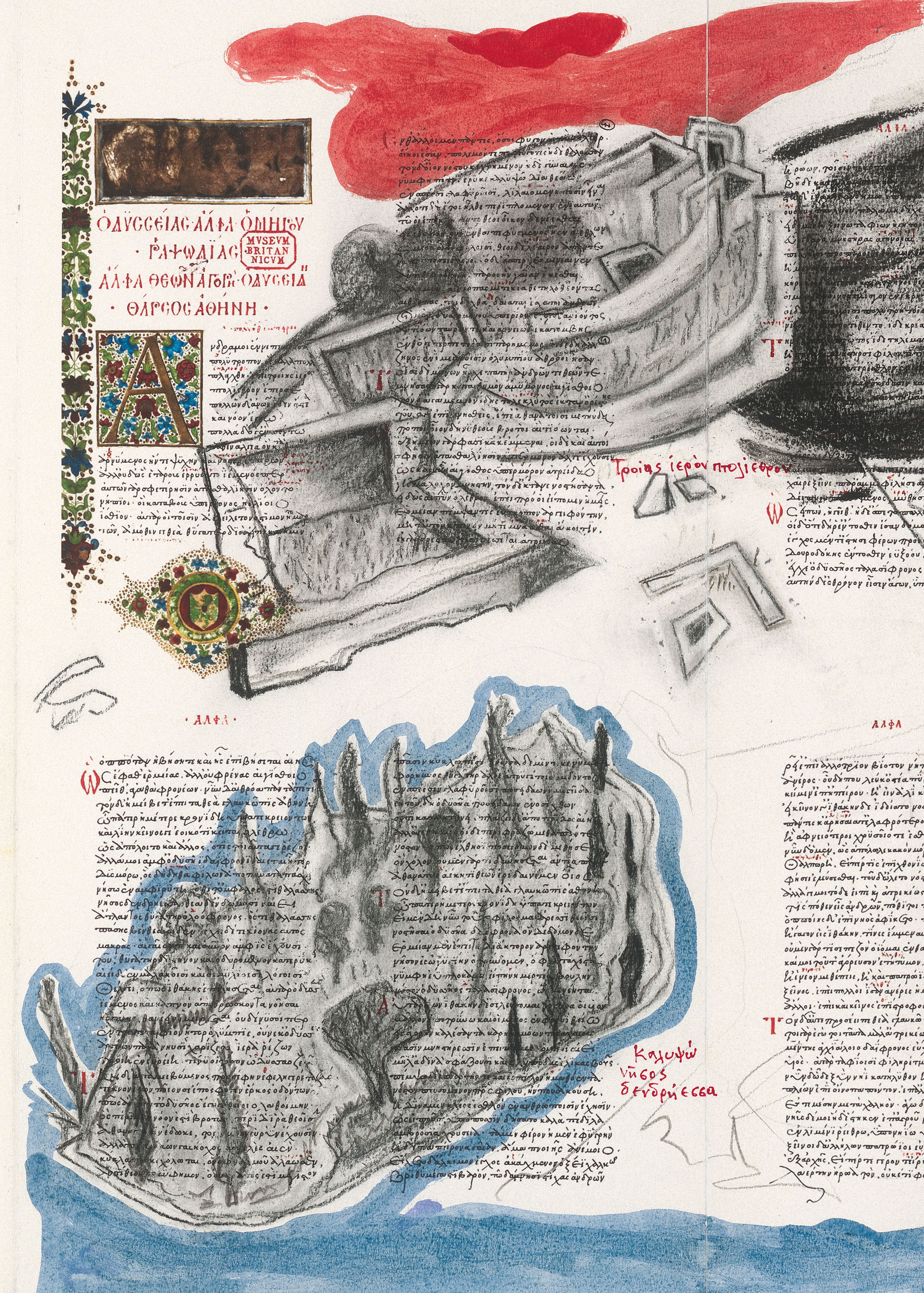
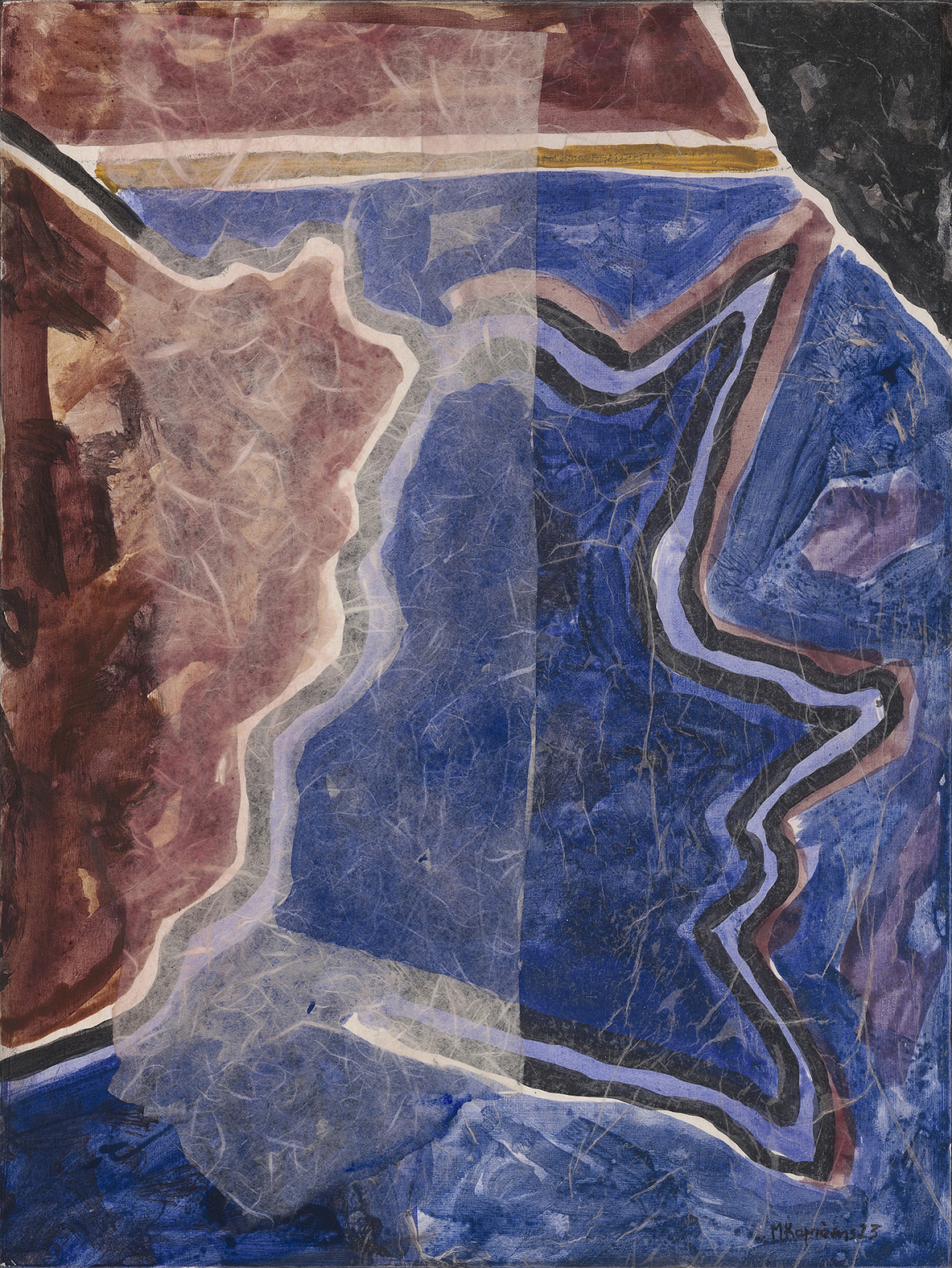
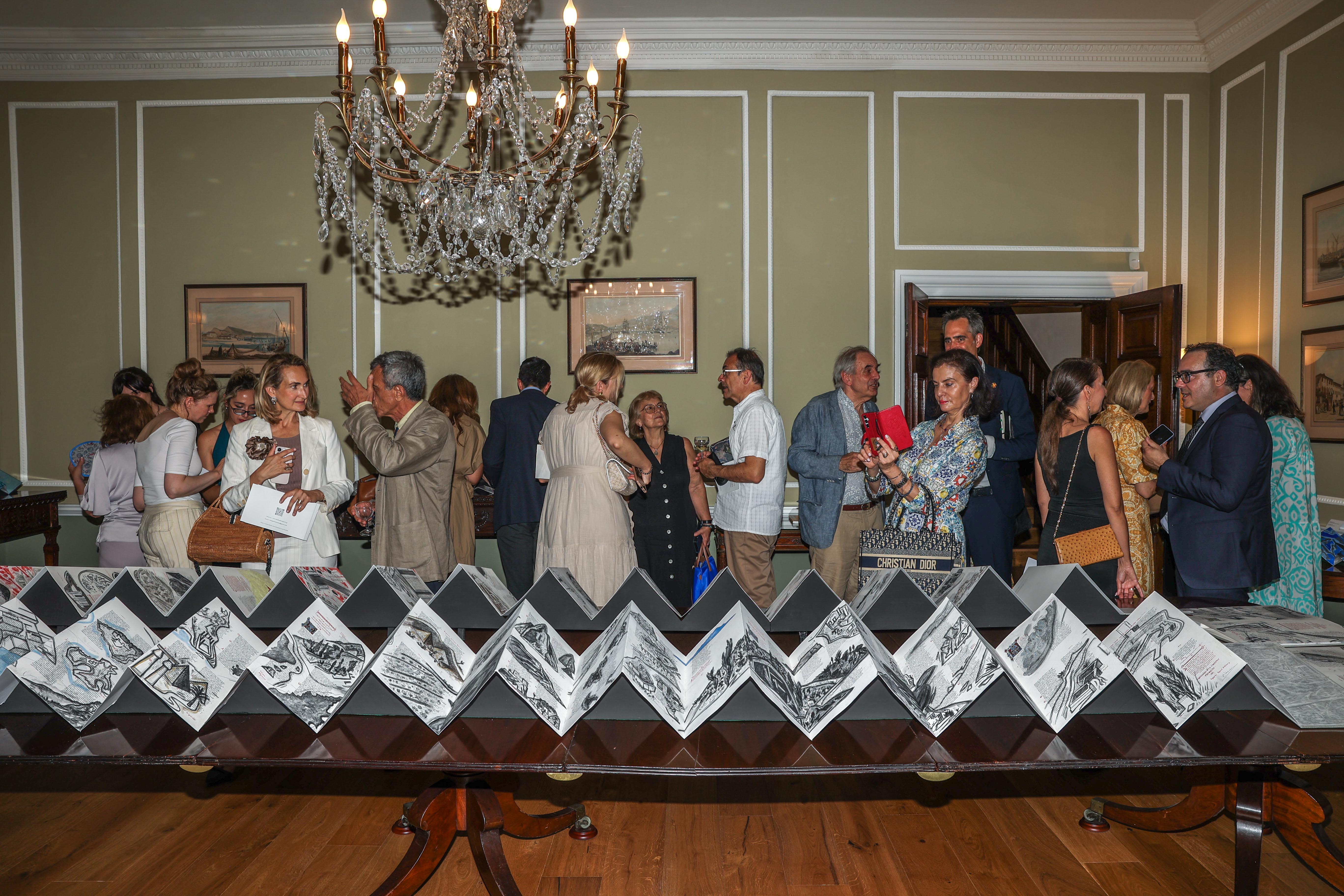
CELEBRATING the enduring and universal resonance of Homer’s Odyssey, the Embassy of Greece in London hosted a special event on 25 June to mark the opening of Odyssey – Imaginary Cartographies, an exhibition by renowned Greek artist Markos Kampanis, on display at the Hellenic Residence until 3 July.
Entitled “An Odyssey without End: Homer’s Epic Across Time and Culture”, the event brought together leading voices from the fields of classical scholarship, politics, journalism, music, business and the visual arts, reflecting the extraordinary reach of the ancient Greek epic across disciplines and artistic forms, as well as its enduring presence in contemporary thought, culture and public life.
Why does the Odyssey continue to speak to us so powerfully nearly three millennia after it was composed? Why does it continue to inspire readers, writers, artists and creators around the world? And how can we explain the renewed interest in the Homeric epic, with two major film adaptations in just two years, new translations, and a wealth of artistic responses? These were among the central questions explored throughout the evening.
Opening the event, Ambassador Yannis Tsaousis recited an extract from “Upon a Foreign Line of Verse”, the poem written in London in 1931 by Nobel laureate George Seferis, who later served as Greece’s Ambassador to the United Kingdom (1957–1962) and lived at the Hellenic Residence during his tenure. In the poem, Seferis reflects on the figure of Odysseus. In his remarks, the Ambassador highlighted the Odyssey‘s significance as a foundational work of world culture and one of the greatest monuments of the Greek language and literary tradition. He also underlined its defining influence on Greek literature and culture, as well as its enduring place in the identity and collective memory of Greeks around the world.
Markos Kampanis then introduced his exhibition, explaining how the theme of perpetual wandering became one of the principal sources of inspiration for his artistic engagement with the Odyssey. At the heart of the exhibition is a remarkable four-volume artist’s book, created through artistic interventions on a digital reproduction of the British Library’s fifteenth-century manuscript of Homer’s Odyssey (Harley MS 6325). Dr Andrea Clarke, Lead Curator of Medieval and Early Modern Manuscripts at the British Library, subsequently explored the exhibition’s unique connection with the manuscript, while also presenting the Library’s outstanding collection of Greek manuscripts.
A high-level and engaging panel discussion followed, featuring Dr Peter Swallow MP, Chair of the APPG for Classics, Dr Daisy Dunn, author and classicist, and Dr Antony Makrinos, Associate Professor in Classics at University College London, moderated by Alec Russell, Foreign Editor of the Financial Times. The discussion explored the Odyssey‘s place as a masterpiece of world culture and a cornerstone of the Western literary canon, the reasons it continues to inspire artists and captivate readers, the lessons it may hold for today’s world, and the importance of strengthening classical studies.
A particular highlight of the evening was the specially recorded video messages from world-renowned actor, author and philhellene Sir Stephen Fry, and celebrated Odyssey translator Professor Emily Wilson, who shared their admiration and enthusiasm for Homer’s epic. Joining live from Greece, composer Tom Smail presented his new opera The Odyssey, before the audience enjoyed a musical excerpt from the work.
Representing the Greek diaspora in the United Kingdom, Professor Ioannis Karavias, Chair of the Ithaca Greek Cultural Society in Birmingham, and Panos Manuelides, founder of the UK-based Greek company Odysea Ltd, spoke about the inspiration behind their organisations’ names, highlighting the Odyssey‘s living legacy among Greek communities around the world.
Among those attending the event were Members of the UK Parliament, academics and classicists, representatives of the arts and cultural sector, members of the media, and representatives of the Greek diaspora in the United Kingdom.
The exhibition Odyssey – Imaginary Cartographies remains open to the public until 3 July, weekdays from 5.00 pm to 8.00 pm, at the Hellenic Residence in London. Admission is free upon registration here
The Greek Embassy in London is on 1A Holland Park – W11 3TP London. Phone +44 020 7229 3850
 art scene athens